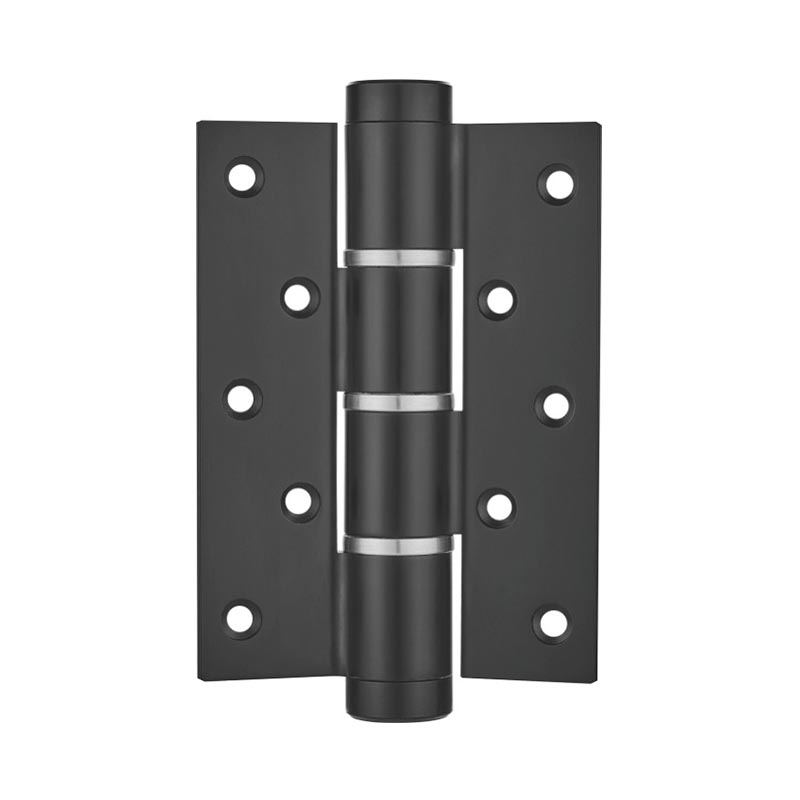
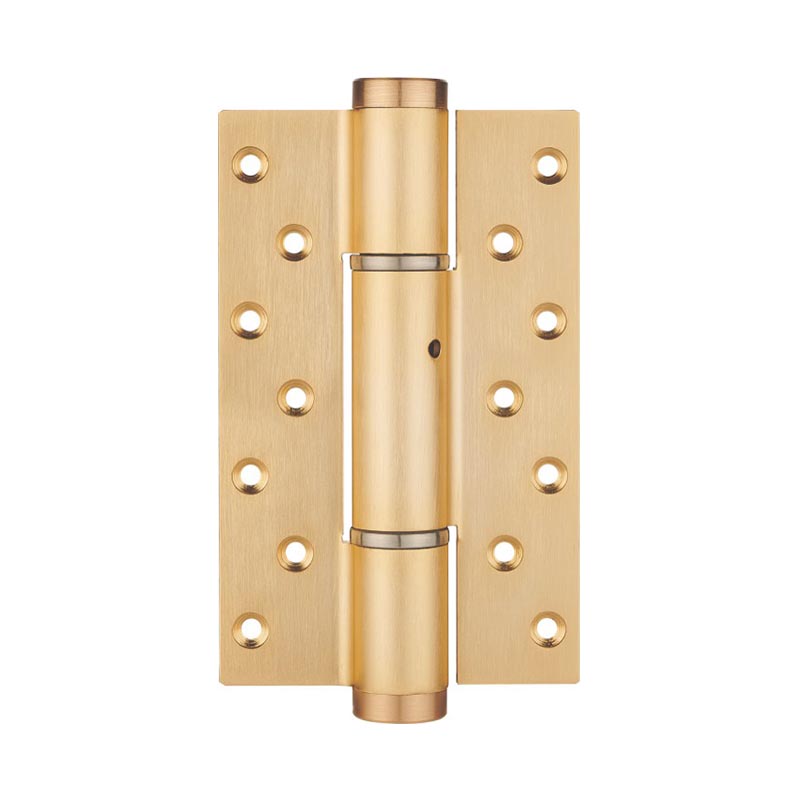
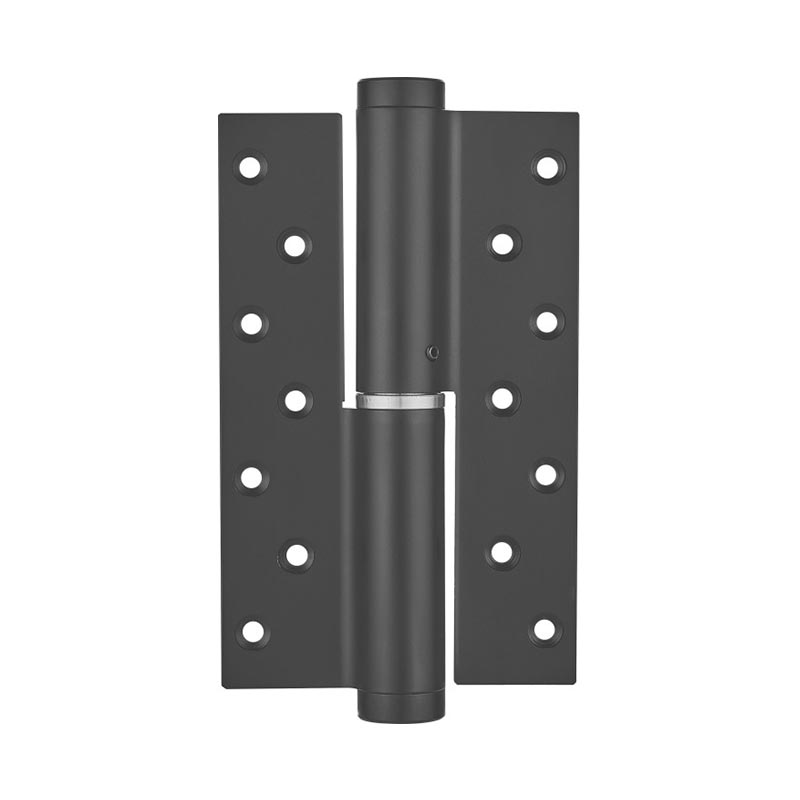
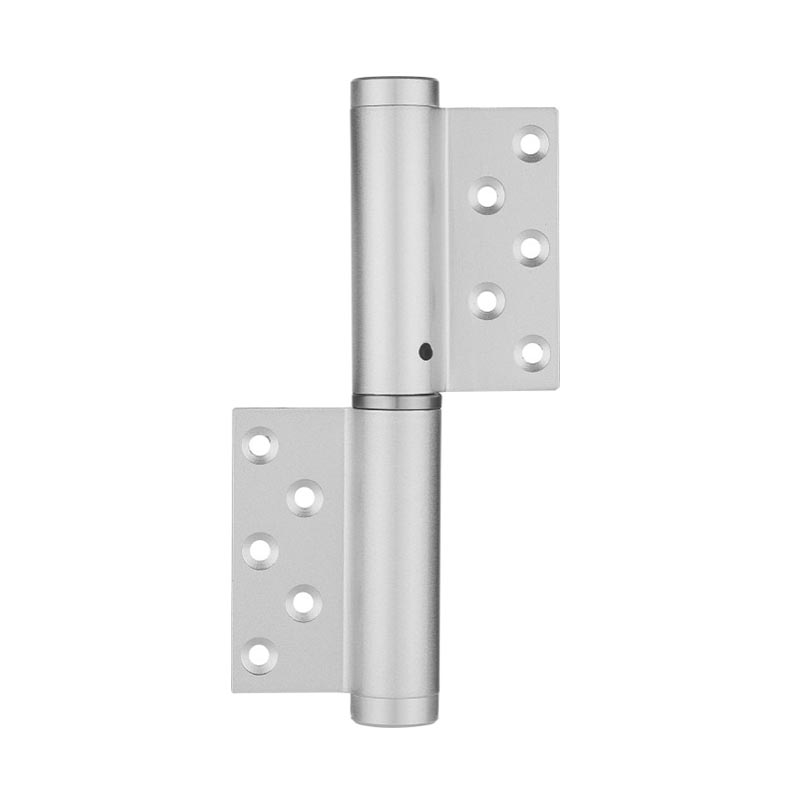
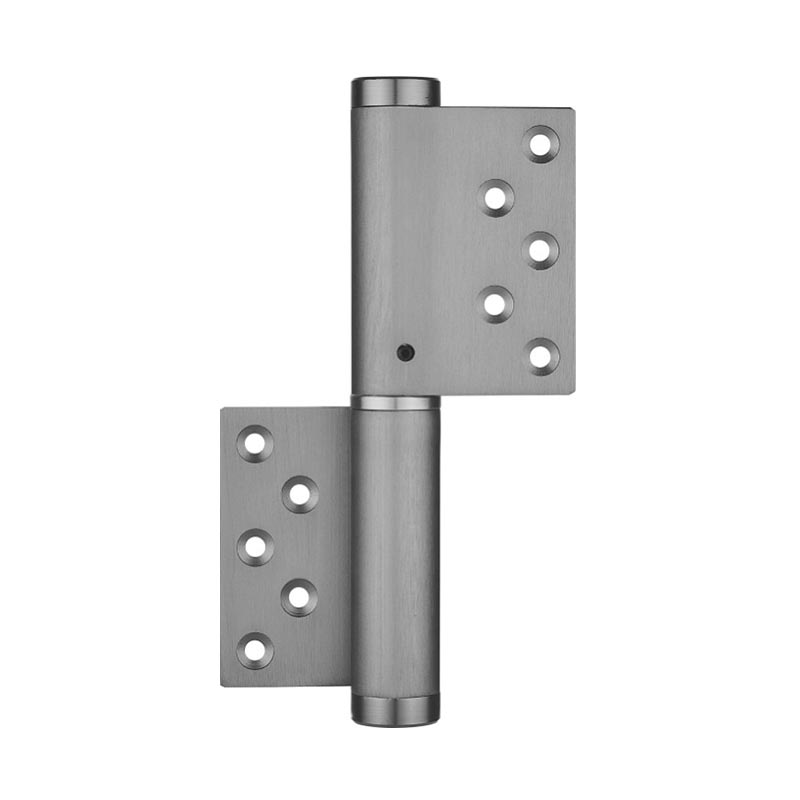
Industrial hardware rarely draws attention on its own. Yet small components often shape how spaces feel and function. Among them, the vertical spring hinge holds a quiet but steady role. It supports movement, guides closure, and adds control without calling for constant attention.
In many work environments, doors and panels open and close countless times each day. The way they move matters. A hinge that can guide that motion in a controlled way becomes more than a simple connector. It becomes part of the system.
A spring hinge is a type of hinge designed to return a door or panel toward a set position. It works through an internal spring that stores energy when the door moves. When released, the hinge uses that stored force to guide the door back.
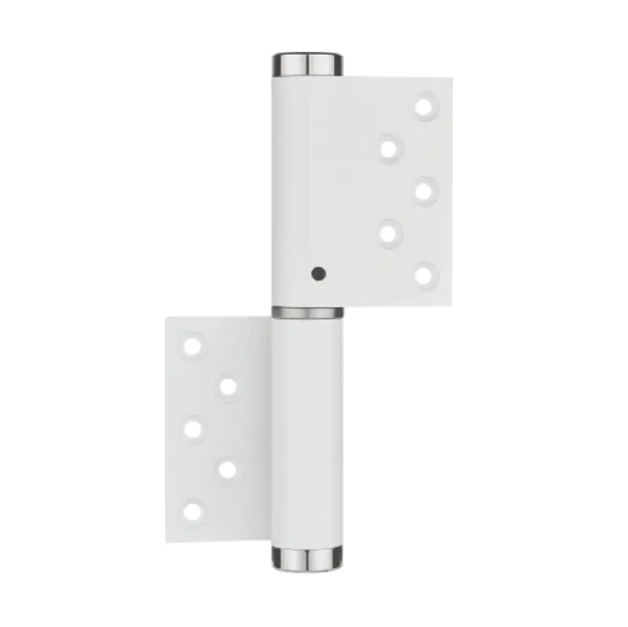
The "vertical" aspect refers to how the hinge is aligned and how it supports motion along an upright axis. It is often used where doors need to close in a steady and controlled way without external devices.
Unlike standard hinges, which only allow rotation, this design adds motion control. It blends movement with resistance. The result feels smooth, not abrupt.
In daily use, the difference becomes clear. A door fitted with this hinge does not swing freely and stop at random angles. It moves with intention. It returns, pauses, and settles.
The working idea is simple, though the effect feels refined. Inside the hinge, a spring is under tension. When the door opens, the spring tightens. Energy builds quietly within the structure.
When the door is released, that energy is released in a controlled way. The hinge guides the door back toward its resting position. The motion is not forced. It feels balanced.
This internal action reduces the need for external closing tools. It also lowers sudden impacts. Instead of slamming, the door slows as it reaches the frame.
Over time, this controlled movement helps reduce wear. It also creates a more stable environment, especially in spaces where repeated motion is constant.
Movement in industrial spaces often follows patterns. Doors open for access, safety, or workflow. When motion becomes unpredictable, it can interrupt that flow.
Controlled motion helps create consistency. A door that closes on its own reduces the need for manual handling. It also supports safety by limiting open gaps.
There is also a subtle effect on noise. Sudden impacts create sound that builds over time. A hinge that softens movement can lower that background level.
In areas where people move frequently, these small changes shape the experience. The space feels calmer. Actions become more predictable.
Spring hinges can be found in plenty of different places. Most of the time people barely notice them, as they fit seamlessly into surrounding structures.
Typical places that install these hinges:
No matter which scenario, these hinges serve the same core purpose. They stand up to frequent opening and closing and keep doors operating steadily.
Different locations also have unique functional demands. In public busy areas, the self-closing feature keeps spaces tidy. For sealed equipment enclosures, it ensures full closure to maintain internal conditions.
At a glance, many hinges look alike. The difference becomes clear during use.
A standard hinge allows free movement. It does not guide the door beyond rotation. Once opened, the door stays where it is placed.
A spring hinge adds a return function. It introduces resistance and direction. The door is encouraged to return to a set position.
This difference changes how the door behaves over time. It reduces the need for manual correction. It also limits random positioning.
Another distinction lies in how force is distributed. The spring absorbs part of the motion. This reduces stress on surrounding components.
The design of a spring hinge focuses on balance. Each feature supports controlled motion without adding complexity.
Here is a simple overview:
| Feature | Description |
|---|---|
| Self-closing function | Returns door to a set position without external devices |
| Internal spring system | Stores and releases energy during movement |
| Smooth motion control | Reduces sudden stops and impacts |
| Compact structure | Fits within standard hinge spaces |
| Adaptable tension | Can be adjusted to suit different usage needs |
These features work together. None stands alone. The value comes from how they interact.
The hinge does not force motion. It guides it. That difference shapes how it feels in daily use.
A spring hinge with great build quality still won't work well if it's mounted incorrectly. Proper alignment is everything here.
If fitted perfectly, the door moves freely without catching. It opens and closes evenly, and the self-closing force stays steady every single time.
Once parts shift out of line, issues start showing up. The door may drag when you push or pull it, or it won't close fully. Over months of use, this uneven strain wears out both the hinge and door frame.
Taking time to position it right keeps the whole unit balanced. The internal spring then works within its designed tension, so the hinge holds up much longer.
Even tiny adjustments during fitting make a real difference. Just a small tweak to the mounting angle can make the door operate far more smoothly.
Durability in industrial environments often comes from consistency. A component that behaves the same way each time reduces strain on the system.
Spring hinges support this idea by managing motion. They absorb part of the force that would otherwise transfer directly to the frame.
This reduces wear on contact points. It also helps maintain alignment over time.
Repeated movement can slowly shift components. A hinge that controls motion helps slow that process.
The result is not dramatic in a single moment. It becomes clear over long periods of use.
Selection often depends on how the hinge will be used. Not all environments require the same level of control.
Some factors to consider include:
These factors shape how the hinge performs in practice. A hinge that works well in one setting may feel different in another.
It is less about finding a single answer and more about matching the hinge to the context.
Small mechanical details often shape how a space feels. A door that closes smoothly can change how people move through an area.
The effect is subtle. It does not draw attention. Yet it adds a sense of order.
In shared environments, this matters. People rely on predictable movement. A hinge that guides motion supports that expectation.
It also reduces small interruptions. Doors are less likely to remain open or close abruptly. The space feels more controlled.
Over time, these details build a more stable environment.
While often found in industrial settings, their use is not limited to them. Any space that benefits from controlled door movement can make use of this design.
They may appear in commercial interiors, storage systems, or even specialized residential setups. The key idea remains the same.
Wherever consistent motion is needed, this type of hinge can fit.
The design adapts to different scales. It can support both large and small applications without changing its basic function.
Design changes tend to follow use patterns. As environments become more focused on efficiency and comfort, small components also adapt.
Spring hinges continue to evolve in subtle ways. Adjustability becomes more refined. Motion control feels smoother.
There is also a shift toward quiet operation. As workspaces change, sound becomes part of design thinking.
These changes are gradual. They do not alter the core function. They refine it.
A hinge is often seen as a simple connector. In reality, it is part of a larger system.
Spring hinges influence how doors interact with their surroundings. They affect timing, spacing, and movement flow.
In systems where timing matters, this becomes important. A door that closes too fast or too slowly can disrupt the process.
By guiding motion, the hinge becomes part of the system logic. It helps maintain rhythm within the space.
Most users do not focus on the hinge itself. They notice how the door behaves.
A smooth return feels natural. It does not require thought. It becomes part of the routine.
When that motion changes, it becomes noticeable. A door that slams or stays open stands out.
The hinge works best when it remains unnoticed. Its success lies in how little attention it draws.
Safety often comes from reducing unexpected movement. A door that closes on its own reduces the chance of it being left open.
In some environments, this supports containment. In others, it helps maintain clear pathways.
Controlled closing also lowers the risk of sudden impacts. The motion remains steady.
While the hinge is not a safety device on its own, it contributes to a safer environment through consistency.
Maintenance tends to be simple. The hinge is designed to operate within its structure.
Regular checks help ensure alignment remains correct. Minor adjustments may be needed over time.
Because the spring manages part of the motion, wear can be more evenly distributed.
This does not remove the need for care. It helps reduce uneven stress.
Industrial design continues to move toward quieter, more controlled environments. Components that support this direction gain attention.
Spring hinges fit into this trend. They offer motion control without adding visible complexity.
There is also a growing focus on user experience. Even in industrial spaces, comfort and ease of use matter.
These hinges support that shift in a subtle way. They improve interaction without changing overall design.
Modern design often values simplicity with purpose. Each component should serve a clear role.
Spring hinges align with this idea. They combine movement and control in a single element.
They do not require additional systems to achieve their effect. This keeps designs clean and efficient.
Their presence may be small, but their role is defined.
Large systems depend on small parts. When one element changes, the effect spreads.
A hinge that guides motion can influence how a door is used. That change can affect workflow, safety, and comfort.
Over time, these small shifts become part of the environment. They shape habits and expectations.
It is not always the visible elements that define a space. Often, it is the parts that remain in the background.Vertical spring hinges belong to that group.

No.123, Kaixuan road, yunshan street, lanxi city, jinhua city, zhejiang province, china

+86-18066248602

+86-579-88864580

+86-579-88864581

Copyright © 2024 Lanxi Maya Hardware Co., Ltd. All Rights Reserved. Privacy Policy

Hydraulic Door Hinges Hardware Factory



 English
 Español
 русский