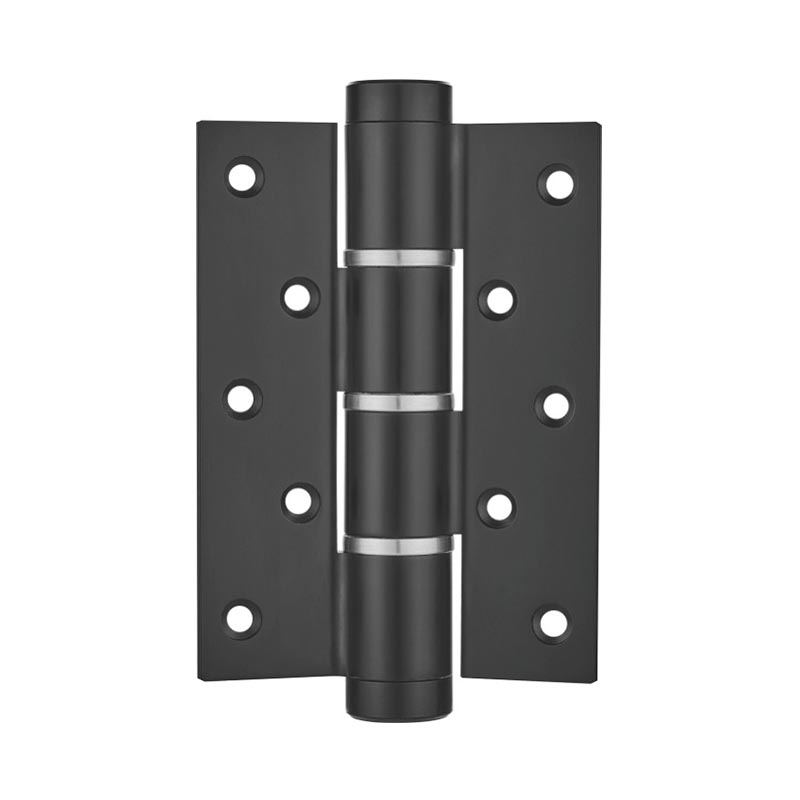
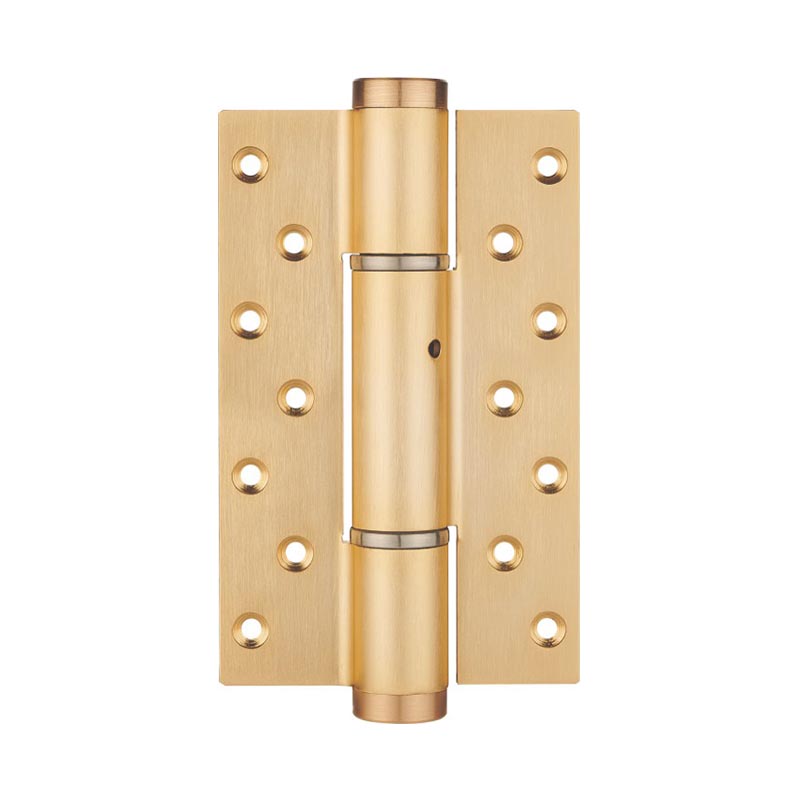
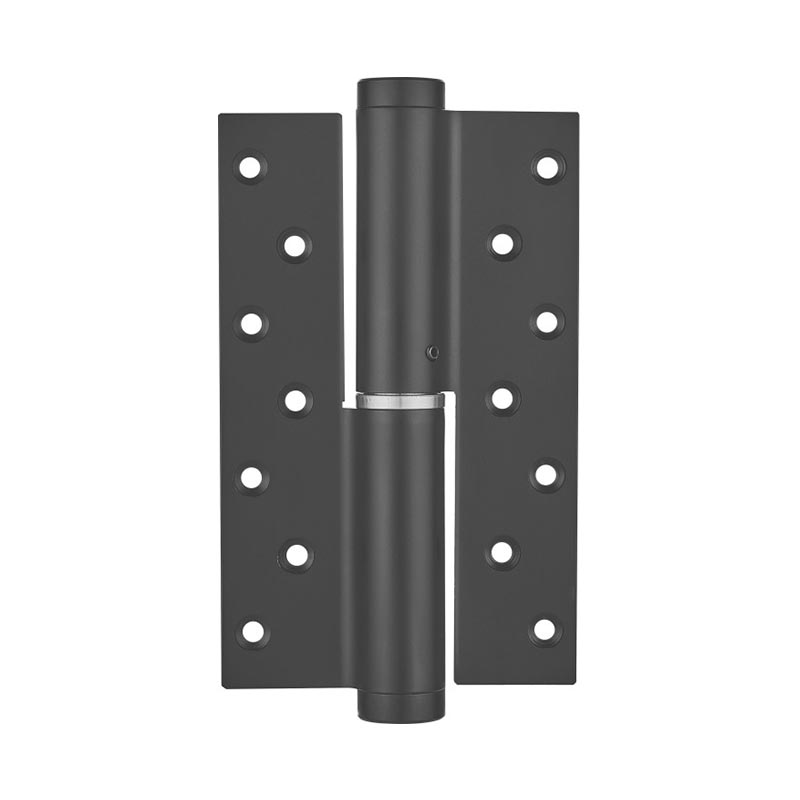
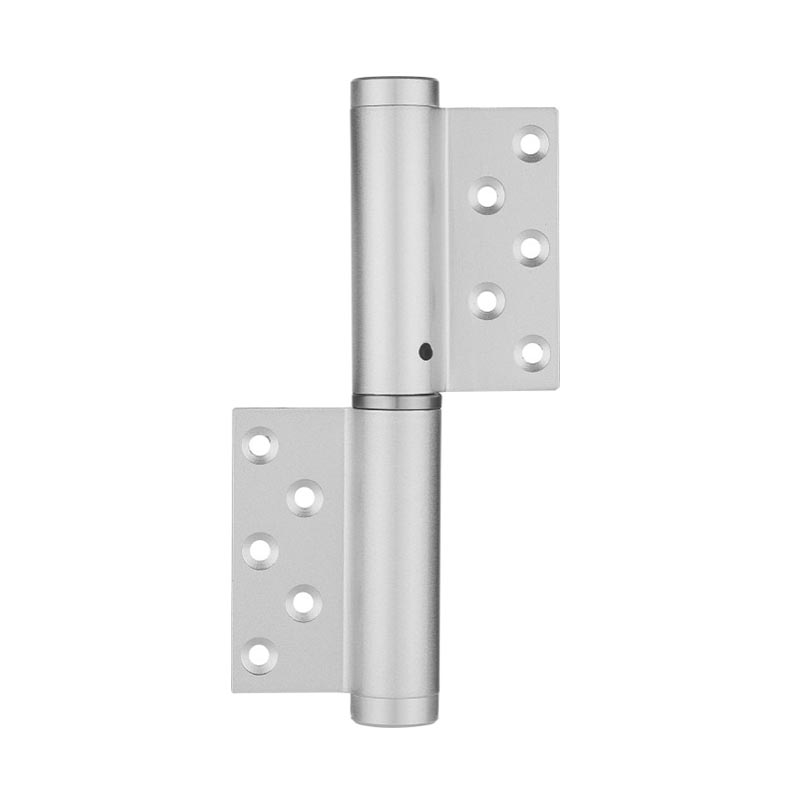
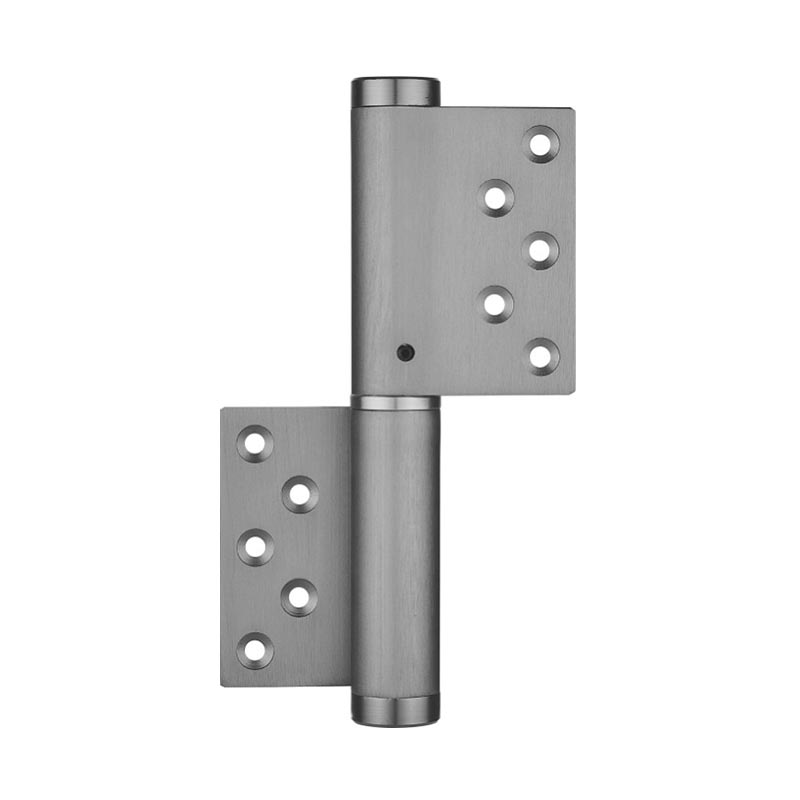
Sprung fire door hinges are not something people usually notice. They sit on the edge of a door, doing a simple job again and again. Open, close, return. Nothing dramatic. Yet inside building systems, this small movement matters more than it looks.
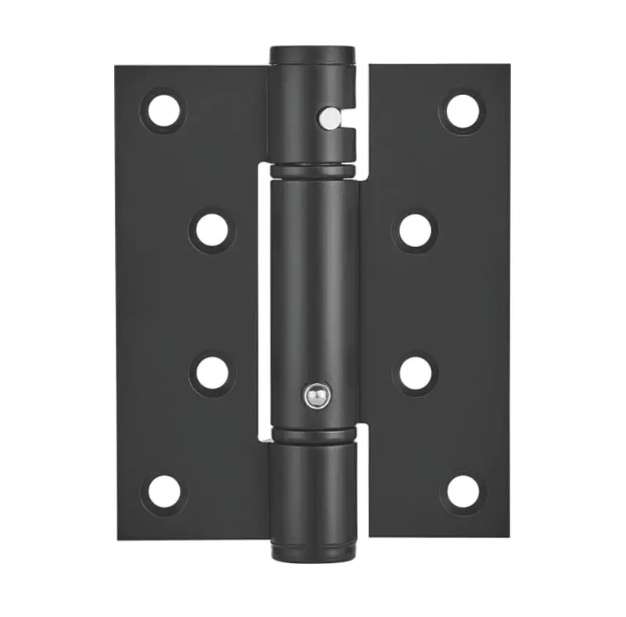
Over time, manufacturing ideas around these hinges have shifted. The changes are not loud. They show up in material choices, surface behavior, and small structural adjustments. What is interesting is how these small details slowly change the overall performance of doors in real spaces.
A few years ago, hinges were often treated as basic hardware. As long as they could hold weight and allow movement, that was enough.
That view has changed.
Buildings today are used more frequently, with more movement through doors. Fire doors in particular are expected to behave in a controlled way without extra attention from users.
A sprung hinge plays into this expectation. It helps the door return to position naturally, without relying on reminders or manual adjustment.
Because of this, manufacturers have started to look at hinges less as simple connectors and more as behavior-control components.
One noticeable shift is in material thinking. Instead of trying to add more layers or complicated structures, the focus has moved toward stability over time.
Different material approaches are being used, but the intention is similar: reduce change during long use.
Common directions include:
It is less about "strong material" and more about "consistent material behavior".
That difference may sound small, but in practice it changes how long the hinge feels smooth in real use.
A hinge is constantly moving. Even small friction changes become noticeable after repeated use.
Because of this, surface treatment is no longer just a finishing step. It affects how the hinge behaves every time the door moves.
A smoother surface tends to reduce resistance during opening and closing. A more stable coating helps the hinge keep its movement pattern over time.
Manufacturers are paying attention to how surfaces age, not just how they look when new.
Looking at newer sprung hinge designs, one thing becomes clear: there is less visual and structural noise.
Instead of adding visible complexity, the focus is on internal behavior.
That often means:
The goal is not to make the hinge impressive. It is to make it predictable.
| Aspect | Earlier approach | Current tendency |
|---|---|---|
| Material focus | basic strength | long-term stability |
| Surface thinking | appearance finish | movement smoothness |
| Design style | visible structure | internal balance |
| Performance idea | basic function | repeated consistency |
| Production mindset | output volume | controlled behavior |
This is not a strict industry rule, but it reflects how thinking has slowly moved.
Sprung fire door hinges are often judged by one simple thing: how the door returns.
Not how fast. Not how strong. But how consistent.
If a door returns differently each time, users notice it. Even slightly uneven movement can feel wrong in daily use.
So the hinge becomes less about pushing movement and more about guiding it back to a stable position.
That is why internal spring behavior and balance are treated carefully during design.
Instead of changing production dramatically, factories are focusing on keeping each batch close to the same behavior.
This sounds simple, but in mechanical products it is not easy.
Small differences in assembly can slowly change how a hinge feels after installation.
To reduce this, production tends to focus on:
The idea is not perfection. It is predictability.
Sprung hinges do not work alone. They are part of a fire door system, where every component plays a role.
In that context, the hinge supports a very specific expectation: the door should not stay open unintentionally.
This creates pressure on consistency. If the hinge behavior varies too much, the door system feels less reliable in everyday use.
So even though the hinge is small, its role is tied to the behavior of the entire door system.
Temperature changes, humidity shifts, and constant use all influence how a hinge behaves over time.
These factors are not always visible during installation, but they appear later in daily use.
Because of that, design choices often aim for "less sensitivity" rather than "maximum performance".
A hinge that behaves steadily in different conditions is usually preferred over one that performs well only in ideal situations.
Looking at current patterns, there is no sudden transformation happening. Instead, changes are slow and layered.
Materials are becoming more stable. Designs are becoming simpler. Production is becoming more controlled.
It feels like the industry is moving toward a quiet goal: fewer surprises during long-term use.
Sprung fire door hinges are a small part of building systems, but they reflect this direction clearly. They are becoming less about mechanical complexity and more about controlled, repeatable movement that stays the same over time.

No.123, Kaixuan road, yunshan street, lanxi city, jinhua city, zhejiang province, china

+86-18066248602

+86-579-88864580

+86-579-88864581

Copyright © 2024 Lanxi Maya Hardware Co., Ltd. All Rights Reserved. Privacy Policy

Hydraulic Door Hinges Hardware Factory



 English
 Español
 русский