

 English
 Español
 русский
News
Home / News / Industry News / Why Steel Spring Hinge Are Widely Used in Modern Door Hardware Systems
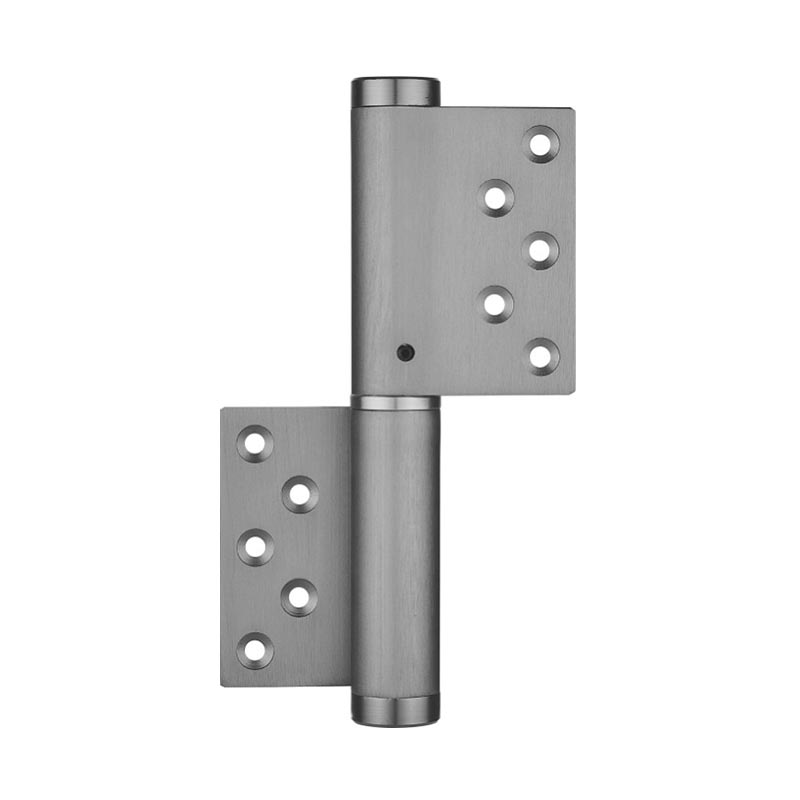
Steel spring hinges are not the kind of hardware people talk about in daily life. Most users only notice doors, not the parts that control how they move. Yet in almost every building, this small component quietly influences how doors behave every single day.
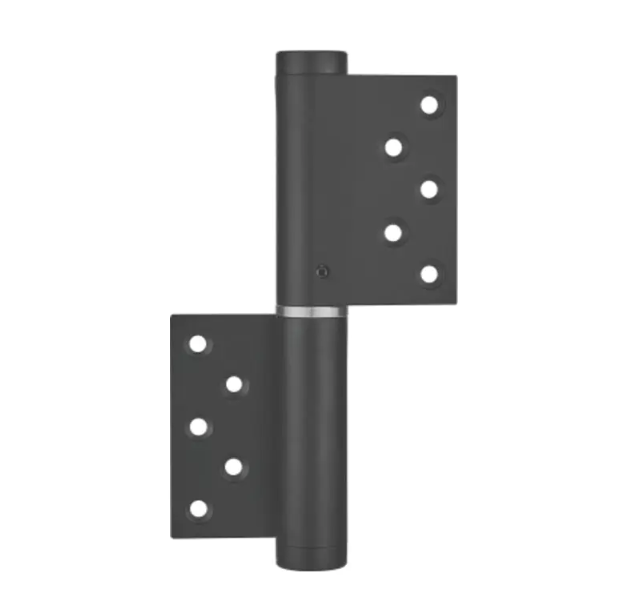
You open a door, it swings, then slowly returns. No extra action is needed. That simple motion is the result of a mechanism that has been refined over time and widely adopted in modern door systems.
What makes it interesting is not complexity, but repetition. The same motion happens again and again, across thousands of buildings, without drawing attention.
A normal hinge only supports rotation. It allows a door to open and stay where it is left.
A steel spring hinge behaves differently. It introduces a return force inside the hinge body. Once the door is released, it naturally moves back toward the frame.
This changes user behavior in a subtle way. In many cases, people no longer need to think about closing the door. It happens on its own.
That small difference is enough to make this hinge a standard choice in many environments.
Material choice in door hardware is not random. Steel remains one of the most common materials because it behaves in a stable and predictable way.
Doors are used frequently. Even in quiet spaces, they go through repeated cycles of opening and closing throughout the day.
Over time, weaker materials may lose shape or feel inconsistent. Steel handles this repetition better. It maintains structure even after long use.
It is not about being the most advanced material. It is about staying consistent over time.
Inside a steel spring hinge, there is a controlled tension system. When a door opens, energy is stored inside the mechanism. When released, that energy guides the door back into position.
To the user, it looks simple. Open, release, return.
But behind that simplicity is a balance between force, resistance, and movement timing. If the return is too strong, the door feels abrupt. If it is too weak, the door stays open too long.
So the real challenge is not making it work, but keeping the movement balanced across repeated use.
These hinges are not limited to one type of building. They appear in many environments where door movement needs to be controlled without extra effort.
Typical usage areas include:
They are rarely visible as a design feature, but they are present almost everywhere doors are used frequently.
In door hardware, people do not usually evaluate performance in extreme terms. What matters more is whether the door behaves the same way every time.
A door that closes differently each time creates small discomfort in daily use. It may not be obvious at first, but over time it becomes noticeable.
Spring hinges are widely used because they reduce this variation. Once installed correctly, the movement pattern remains relatively stable.
That stability is often more valuable than maximum strength or speed.
One important detail often overlooked is installation quality.
Even a well-made hinge can behave differently if it is not aligned properly. A small angle shift can change how the spring force interacts with the door weight.
This may result in:
Because of this, installation is not just a finishing step. It directly affects how the hinge performs in real environments.
Doors are used in different environments, and conditions are not always stable.
Temperature changes, humidity, and long-term usage all influence movement behavior in subtle ways.
Steel helps reduce the impact of these changes, but it does not eliminate them completely. Over time, any mechanical system will respond to its environment.
That is why long-term performance is usually the result of both material stability and environmental adaptation.
Even with newer door systems available, spring hinges continue to be widely used.
The reason is not complexity or innovation. It is reliability in simple use cases.
They do not require external power. They do not rely on electronic systems. They do not need frequent adjustment in normal conditions.
For many buildings, that is enough.
A door is not a single component. It is a combination of several parts working together.
Locks, handles, frames, and hinges all contribute to how the door feels in use.
Among these, the hinge plays a foundational role. If it behaves inconsistently, the entire door experience becomes less smooth.
Steel spring hinges help stabilize this movement, creating a predictable base for other components to work around.
In real use, doors are not tested once or twice. They are used thousands of times.
This repetition is where differences between products become visible.
A hinge that feels smooth at the beginning may change after extended use if the internal balance is not stable.
Steel spring hinges are designed with this repetition in mind. The goal is not short-term performance, but long-term consistency.
Modern building systems often include advanced technology. However, not every component needs to be complex.
In many cases, simple mechanical solutions are still preferred because they are easier to maintain and understand.
Spring hinges fall into this category. They provide controlled movement without adding complexity to the system.
This simplicity is one reason they continue to be widely used in different types of projects.
It is easy to ignore components like hinges because they are small and repetitive.
But over time, they influence how users experience space. A door that closes smoothly, consistently, and without attention contributes to a more stable environment.
Steel spring hinges may not stand out visually, but they play a continuous role in that background behavior.
They represent a type of hardware that does not try to attract attention, yet remains essential in everyday building function.

No.123, Kaixuan road, yunshan street, lanxi city, jinhua city, zhejiang province, china

+86-18066248602

+86-579-88864580

+86-579-88864581

Copyright © 2024 Lanxi Maya Hardware Co., Ltd. All Rights Reserved. Privacy Policy

Hydraulic Door Hinges Hardware Factory