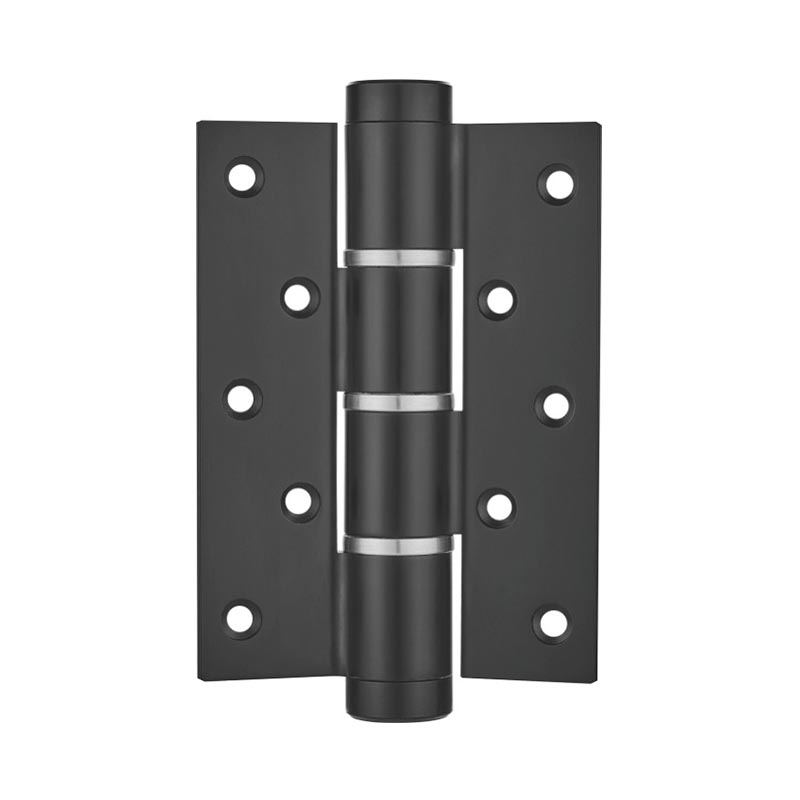
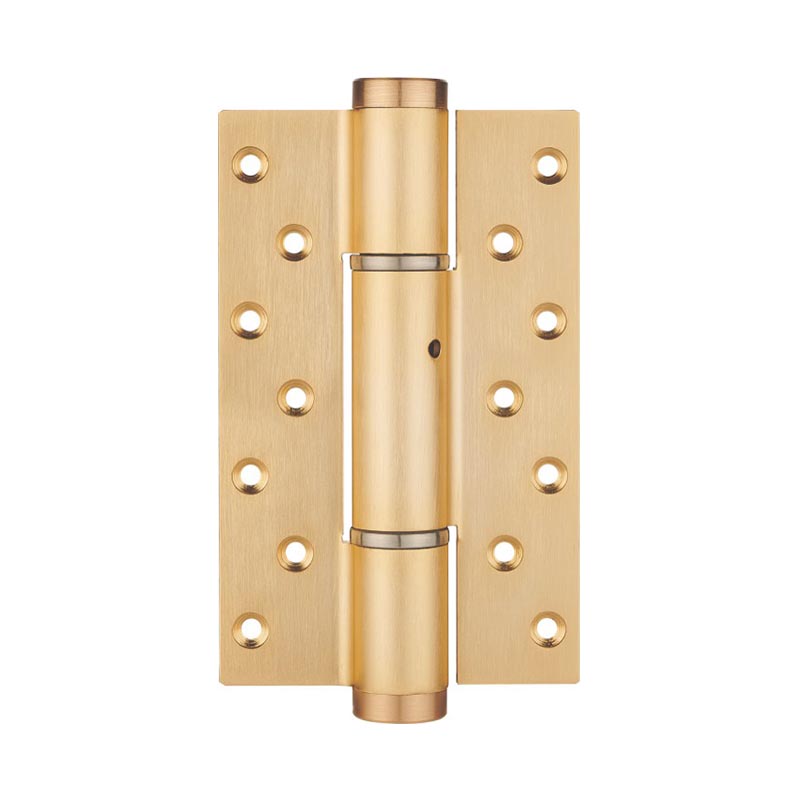
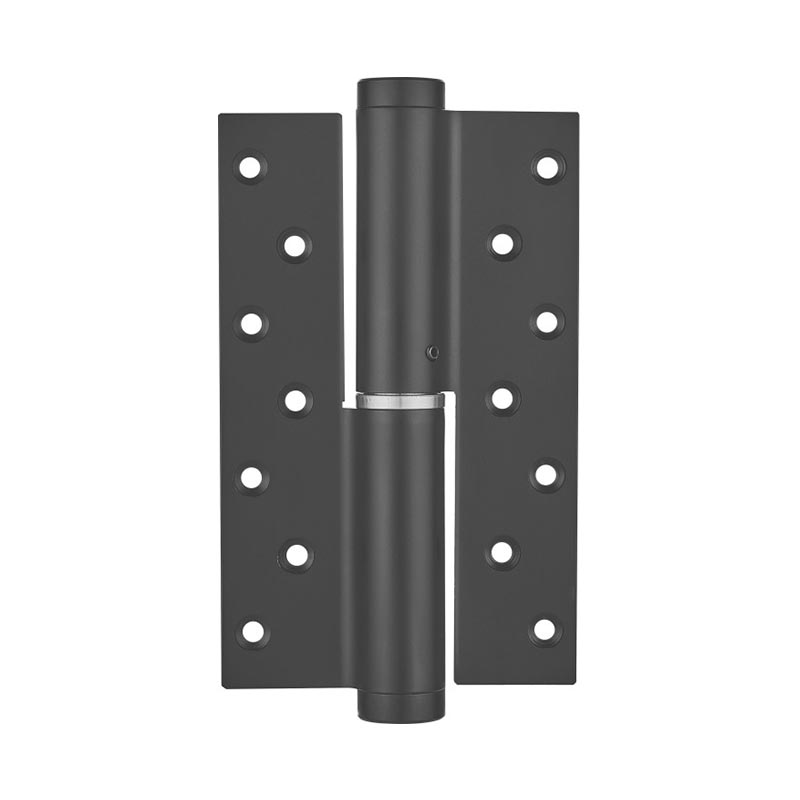
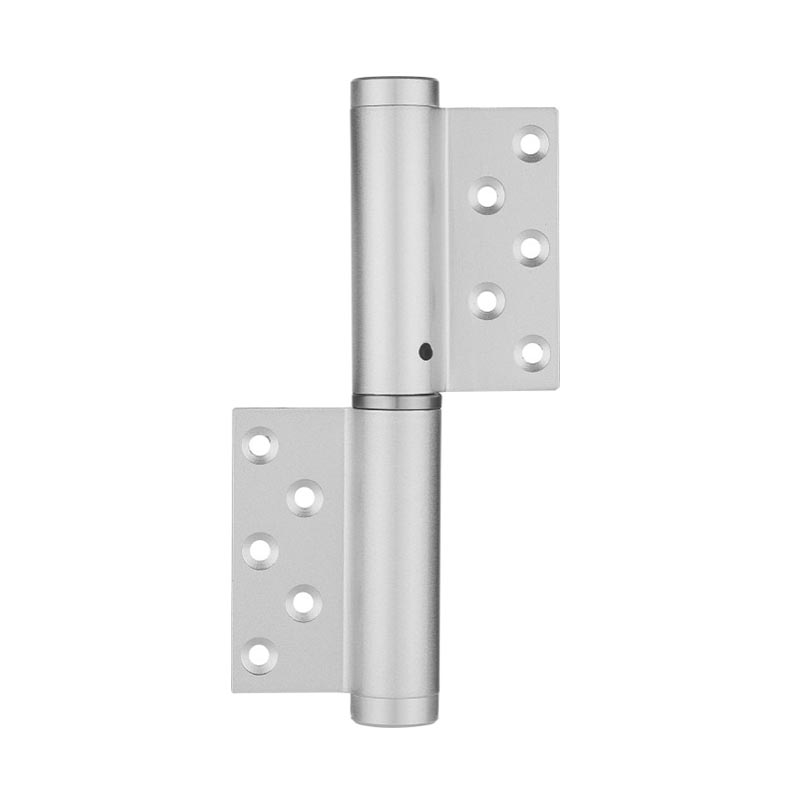
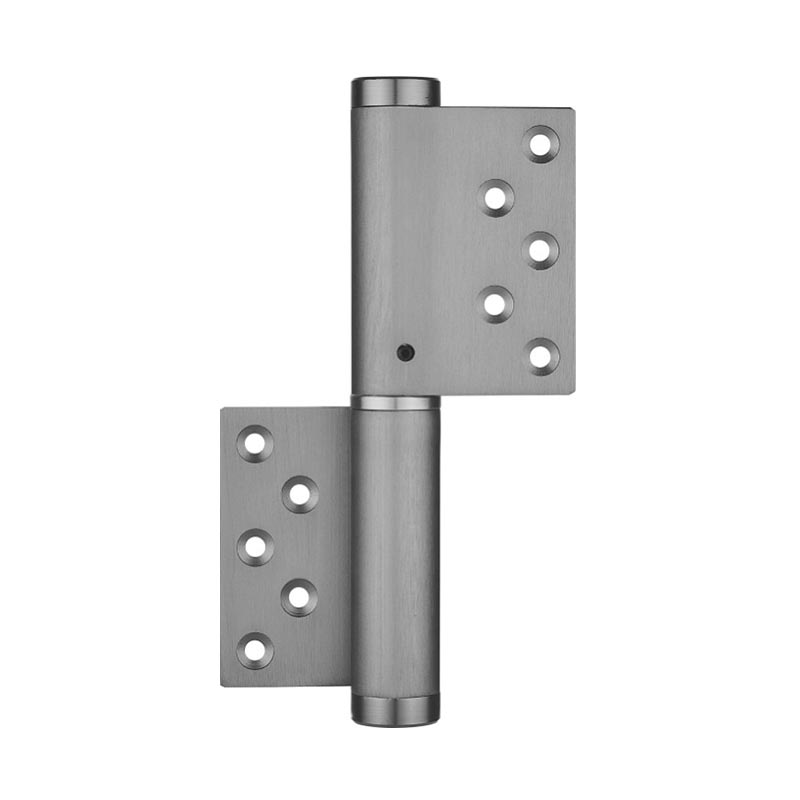
Hydraulic trap door hinges are no longer limited to industrial floors or hidden storage spaces. They appear in modern interiors, commercial layouts, and working environments where access needs to stay discreet yet practical. Behind these doors, the hinge system quietly determines how the door behaves in daily use.
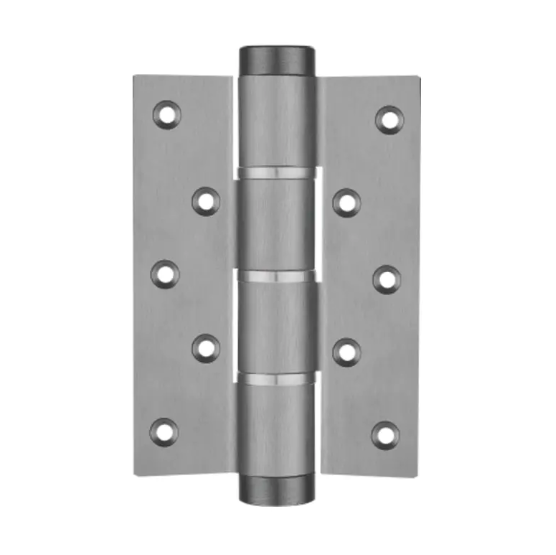
Two common approaches exist. One relies on a simple mechanical pivot. The other introduces a controlled motion through hydraulic action. At a glance, both allow a door to open and close. In real settings, the difference becomes more noticeable over time.
A traditional trap door hinge is built around a basic pivot point. The structure allows rotation when force is applied. Once released, the door remains in the position where it was left unless another force moves it again.
This type of hinge does not guide the speed of movement. It does not slow the door or assist in closing. The motion depends entirely on how the user handles it.
Because of this simplicity, it has been widely used in many environments for a long time. It works without additional systems. It does not require adjustment beyond installation. In low-traffic areas, this straightforward behavior is often enough.
At the same time, the lack of control can lead to uneven use. Some doors may close too quickly. Others may stay open longer than intended.
A hydraulic trap door hinge introduces resistance into the movement. Instead of allowing free motion, it guides how the door opens and closes.
When the door is lifted, the hinge absorbs part of the force. When it returns, the movement slows down instead of dropping freely. This creates a controlled closing action.
The internal mechanism manages motion without needing constant user input. The door follows a smoother path both when opening and closing. The effect is not dramatic, but it becomes noticeable in repeated use.
In spaces where doors are opened frequently, this controlled behavior reduces sudden movement and makes operation feel more stable.
The difference between the two hinge types becomes clear during daily interaction.
With a traditional hinge, movement depends on the user. A quick push can lead to a fast drop. A gentle movement may leave the door slightly open. There is no built-in correction.
With a hydraulic hinge, movement follows a more consistent pattern. The door slows as it approaches closure. Even if opened with different force levels, the closing behavior remains relatively steady.
This difference affects not only the door itself but also the surrounding space. Sudden motion can create noise or interruption. Controlled motion blends more quietly into the environment.
Both hinge types are still used across different environments, but their placement often reflects their behavior.
Traditional hinges are commonly found in:
Hydraulic hinges are more often installed in:
The choice is not only about function. It is also about how the door fits into the rhythm of the space.
Safety is a key factor when choosing the right hinges.
Ordinary hinges let doors move freely. If you let go suddenly, the door will slam shut fast. This can be dangerous, especially for heavy doors or ones that get used a lot.
Hydraulic hinges fix this problem by slowing down the closing motion. The door won't snap shut all at once, and it closes gently and steadily instead.
This feature works really well for doors used by many people. It stops unexpected fast movements from happening.
This kind of safety doesn't rely on extra guards. It just makes the door's movement steady and easy to anticipate.
Noise often comes from uncontrolled motion. A door that closes too quickly may create a sharp sound. In quiet environments, even small sounds can stand out.
Traditional hinges do not address this. The sound depends on how the door is handled.
Hydraulic hinges help reduce sudden impact. The closing action is softer, which lowers noise levels. Over time, this contributes to a calmer environment.
User experience also shifts slightly. A door that moves in a controlled way feels easier to use. It does not require careful handling every time.
These small differences can influence how a space is perceived, even if users do not actively notice the hinge itself.
Regular hinges are pretty easy to fit. They have no complex internal parts, so setting them up is straightforward.
They also need almost no upkeep. With fewer moving pieces, there's little to adjust over time.
Hydraulic hinges take more care when installing. Alignment is critical since they manage how the door moves. Once fitted properly, they run smoothly with no extra fuss.
For upkeep, you mainly check if the door moves evenly, instead of looking for obvious wear. The aim is to keep the movement soft and steady long-term.
No matter which style you pick, good installation plays a bigger role in long service life than the hinge itself.
Frequency of use changes how hinges perform over time.
Traditional hinges may show uneven behavior under repeated use. Movement can become less stable. The door may not stay aligned as smoothly as before.
Hydraulic hinges are designed to handle repeated motion in a more controlled way. The internal resistance helps maintain consistent behavior even after many cycles.
This does not mean one type replaces the other. It reflects how each responds to different levels of activity.
In environments where doors are used many times throughout the day, controlled motion tends to remain more stable.
Design is not only about appearance. It also includes how a space functions during everyday use.
In minimal or modern interiors, hidden floor doors are often integrated into the layout. The hinge system becomes part of how seamlessly the door blends into the floor.
A hydraulic hinge supports this by allowing smooth, quiet movement. The door behaves in a way that matches the overall design intent.
Traditional hinges may still be used where visibility is not a concern. In these cases, function takes priority over movement quality.
Design decisions often reflect how much attention is given to the experience of using the door.
Control is the central difference between the two hinge types.
Traditional hinges offer freedom of movement. The user controls everything. This can be useful in simple applications where precision is not required.
Hydraulic hinges introduce guided motion. The hinge itself manages part of the movement. This reduces the need for careful handling.
In practice, control does not limit use. It shapes it. The door becomes easier to operate in a consistent way.
This difference may seem small at first, but it becomes more noticeable in spaces where doors are used often.
| Aspect | Traditional Trap Door Hinges | Hydraulic Trap Door Hinges |
|---|---|---|
| Movement | Free, user-controlled | Guided, controlled |
| Closing behavior | Can be sudden or uneven | Smooth and steady |
| Noise level | Depends on handling | Generally quieter |
| Safety | Less predictable | More controlled |
| Installation | Simple | Requires careful alignment |
| Maintenance | Minimal | Focus on movement consistency |
| Suitable environments | Low-use or hidden areas | High-use or visible spaces |
In many projects, hinge selection is not discussed in detail. It is often treated as a small component. Yet it affects how people interact with the space every day.
A door that closes too quickly may interrupt movement. A door that stays open may affect how areas are separated. Over time, these small details shape the overall experience.
Choosing between hydraulic and traditional hinges is less about replacing one with the other. It is about matching the hinge behavior to the environment.
Some spaces require simplicity. Others benefit from controlled motion. The difference lies in how the door is used, not just how it is built.
People tend to adjust their behavior based on how a door responds.
With traditional hinges, users often learn to handle the door carefully. They may slow down the closing motion or check whether the door is fully shut.
With hydraulic hinges, less adjustment is needed. The hinge supports consistent behavior, so users do not need to think about it as much.
Over time, this changes how natural the interaction feels. The door becomes part of the routine rather than something that requires attention.
The final choice often comes down to a combination of factors:
No single factor determines the answer. Instead, the decision reflects how these elements come together in a specific space.
In some cases, simplicity is enough. In others, controlled movement becomes part of the design approach.
The hinge itself remains a small detail, yet it quietly shapes how the door behaves every time it is used.

No.123, Kaixuan road, yunshan street, lanxi city, jinhua city, zhejiang province, china

+86-18066248602

+86-579-88864580

+86-579-88864581

Copyright © 2024 Lanxi Maya Hardware Co., Ltd. All Rights Reserved. Privacy Policy

Hydraulic Door Hinges Hardware Factory



 English
 Español
 русский