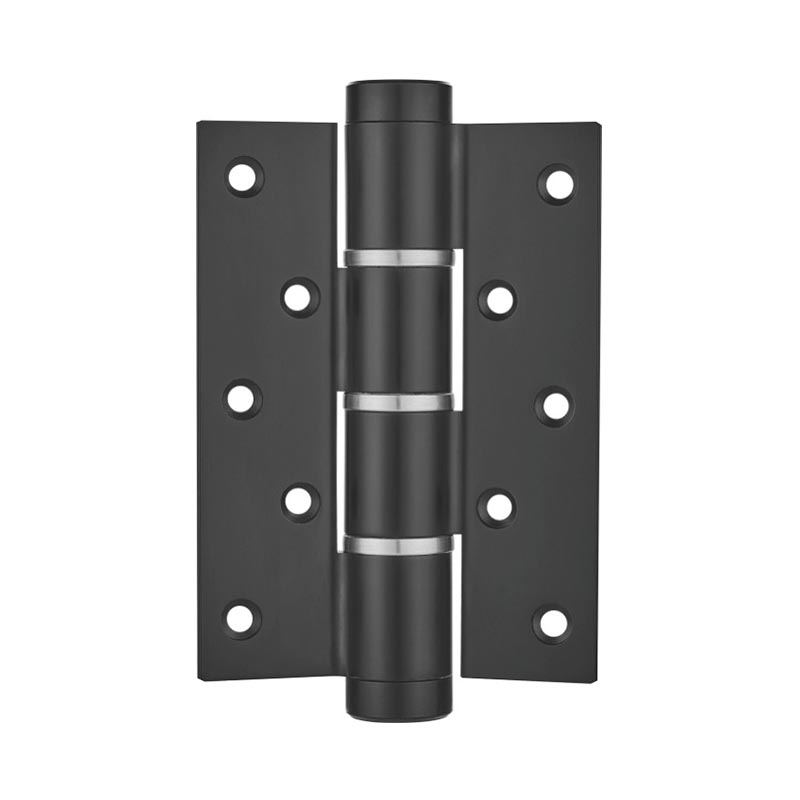
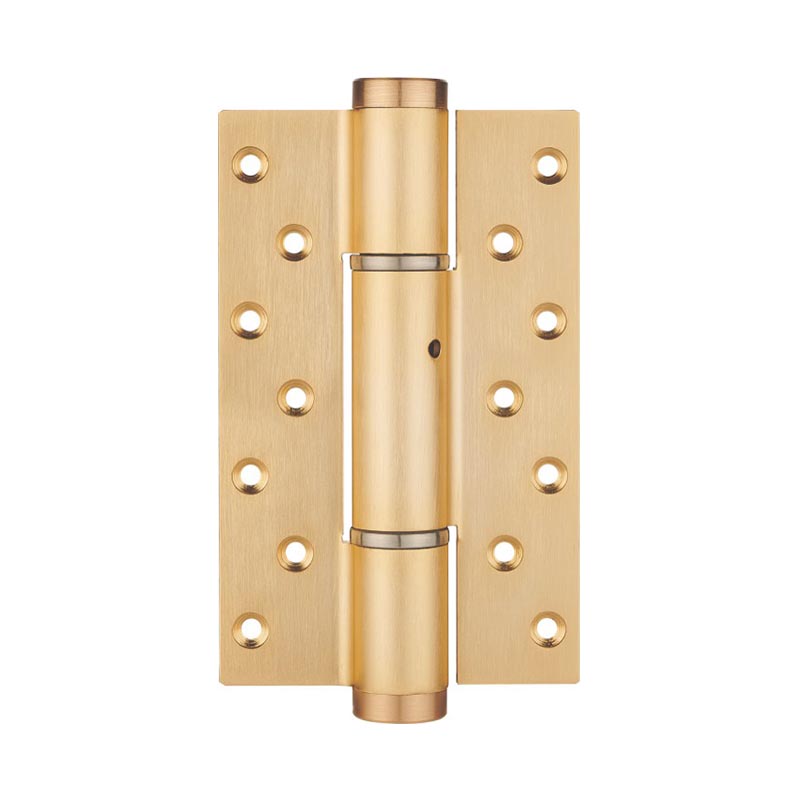
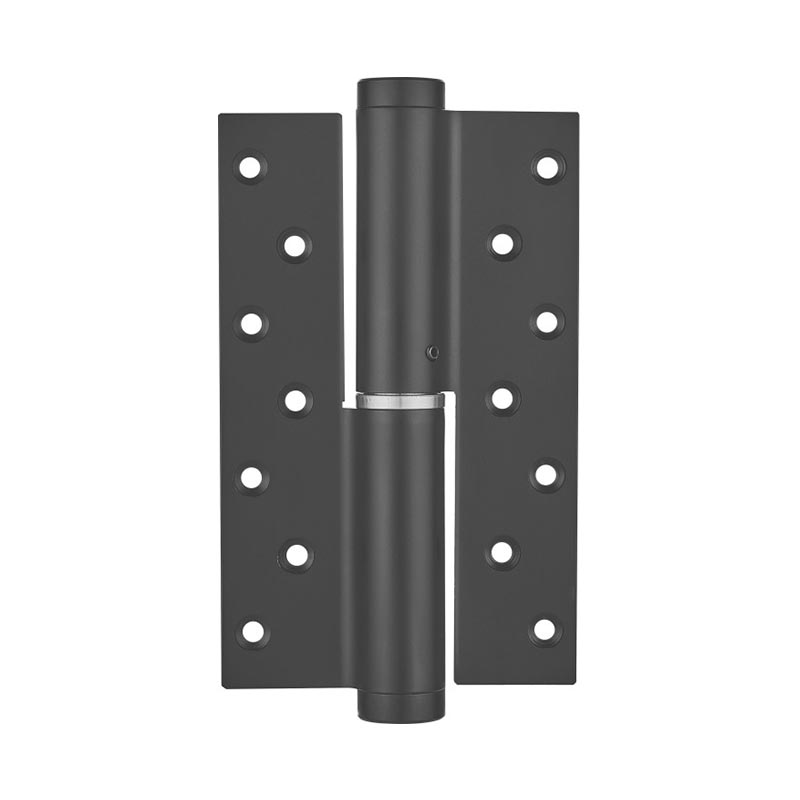
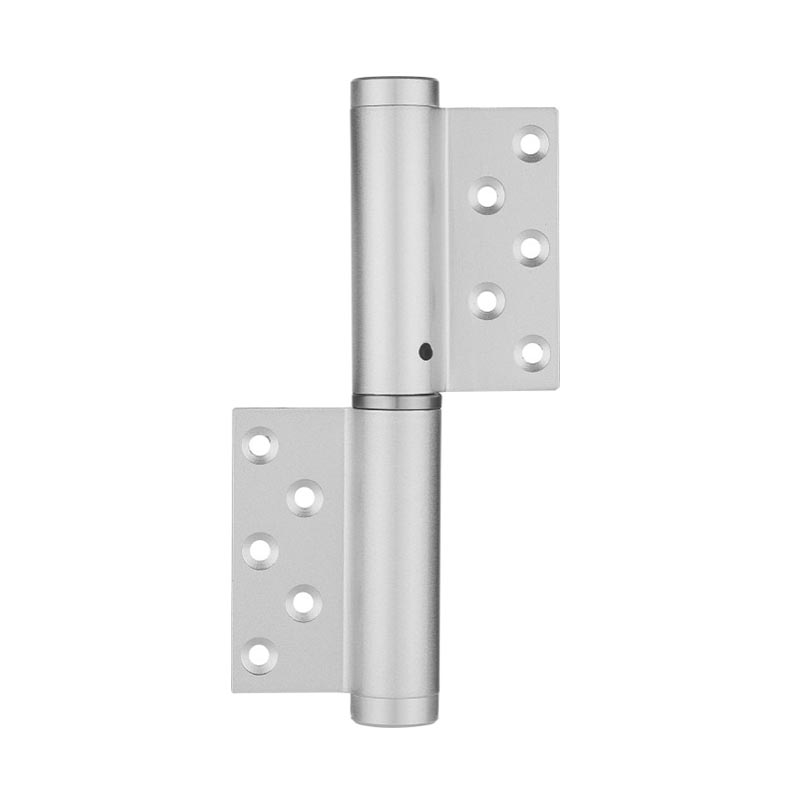
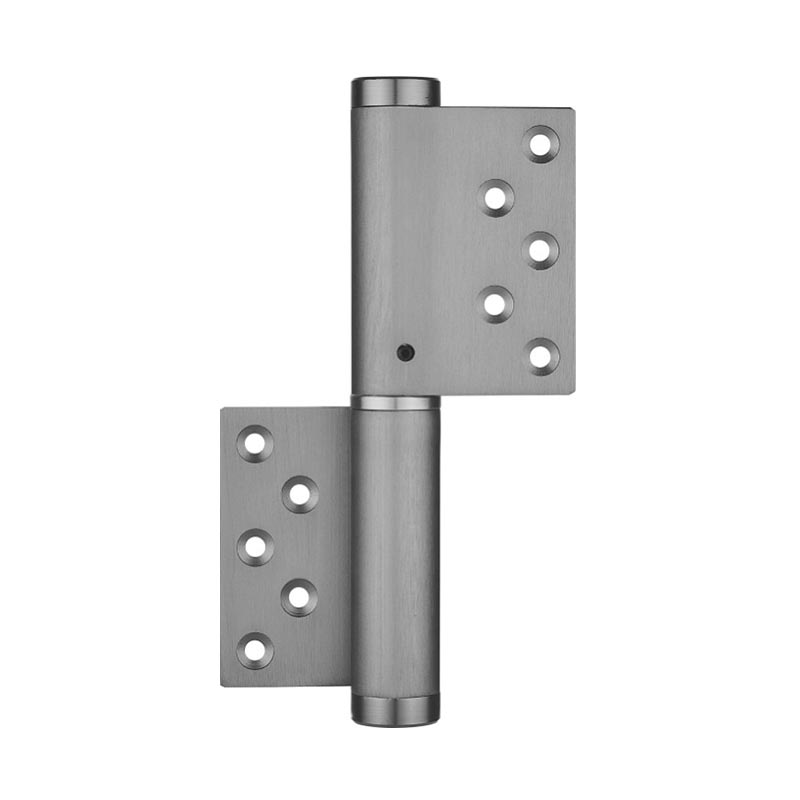
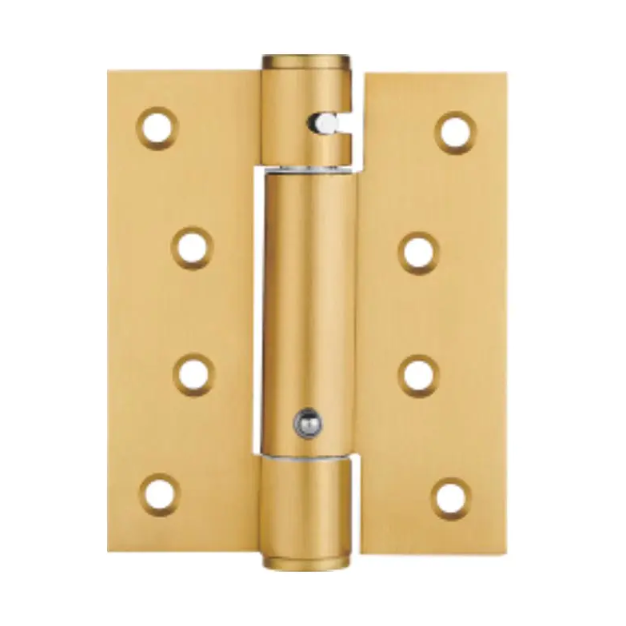
Heavy spring hinge are used in many door systems where automatic closing is expected. They are not complex devices on the surface, but their behavior directly affects how a door feels during daily use.
In real buildings, doors are rarely used in a controlled way. People open them with different force, at different speeds, and sometimes with objects in hand. Because of this, hinge behavior slowly becomes noticeable over time.
Tension adjustment is a way to bring that movement back into balance.
A new installation usually feels smooth at the beginning. The door closes at a stable speed, and the return motion feels predictable.
After some time, things can feel slightly different.
Sometimes the door starts to close faster than expected. Sometimes it feels slower. In some cases, it does not return fully unless pushed again.
These changes are not sudden. They develop quietly through repeated use.
There are a few common reasons behind this:
Because of this, tension adjustment becomes part of normal maintenance in many commercial spaces.
Inside a heavy spring hinge, tension controls how strongly the door returns after being opened.
A small change in tension can affect:
It does not change the door itself. It only changes the way the hinge reacts.
That is why even small adjustments can be noticeable in daily operation.
The relationship between tension level and door movement can be summarized in a simple way:
| Tension Condition | Door Behavior | What it feels like in use | Common application |
|---|---|---|---|
| Higher tension | Faster return movement | Door closes firmly and quickly | Heavy doors or busy entrances |
| Balanced tension | Smooth, controlled closing | Door returns steadily without impact | Offices, general interiors |
| Lower tension | Slower return movement | Door may stay slightly open longer | Light doors or low-use areas |
This is not a fixed rule, but it reflects what is often observed in real environments.
Before changing anything on the hinge, it helps to observe how the door behaves in normal conditions.
A door does not operate in isolation. It is affected by several small factors that are easy to overlook.
These usually include:
Sometimes the issue is not tension itself. It can be alignment or uneven load on the door.
In practice, tension adjustment is not a one-time action. It is more like a gradual correction process.
A small change is made first. Then the door is opened and released to see how it behaves.
This cycle is repeated until the movement feels stable.
It is often done like this:
adjust slightly → test door movement → observe closing behavior → adjust again if needed
Rushing this process usually leads to over-adjustment, which creates new imbalance.
Door weight plays a major role in how the hinge behaves.
A heavier door naturally needs more return force. Without enough tension, it may not close fully or may stop before reaching the frame.
A lighter door reacts faster. If tension is too strong, the closing motion can feel abrupt.
In real use, installers often adjust based on feel rather than exact measurement, because each door behaves slightly differently.
Door behavior is not only mechanical. The environment also has a quiet influence over time.
Temperature changes can slightly affect material response. Frequent usage can also change how the hinge feels after months of operation.
Even airflow between rooms can affect closing speed in some cases, especially in buildings with strong ventilation systems.
These factors do not break the hinge, but they slowly change its behavior.
If the tension setting is not well matched, the door still works, but the movement becomes less controlled.
When tension is too high:
When tension is too low:
These issues usually become more noticeable in high-traffic environments.
Heavy spring hinges respond better to small corrections.
Large adjustments can easily overshoot the balance point. That creates new issues instead of solving existing ones.
A gradual approach allows the hinge to settle after each change.
In real maintenance work, technicians often prefer multiple small steps instead of a single large adjustment.
It feels slower, but the result is usually more stable.
Tension adjustment does not work alone. Installation quality also plays a quiet role.
If the door is slightly tilted or the hinge is not aligned properly, the movement will never feel fully smooth, even with correct tension.
Sometimes what looks like a tension problem is actually a positioning issue.
That is why door systems are often checked as a whole, not just as individual parts.
Even with newer door systems available, heavy spring hinges remain common in many buildings.
The reason is not complexity. It is simplicity.
They work without power, sensors, or external control systems. They respond directly to movement.
That makes them suitable for:
They are easy to maintain and behave consistently when properly adjusted.
Adjusting tension in a heavy spring hinge is less about achieving a fixed setting and more about matching real usage conditions.
Doors change over time. Usage patterns change. Even environments change slightly.
Tension adjustment is simply a way to bring movement back into a stable range so the door continues to behave naturally in daily operation.

No.123, Kaixuan road, yunshan street, lanxi city, jinhua city, zhejiang province, china

+86-18066248602

+86-579-88864580

+86-579-88864581

Copyright © 2024 Lanxi Maya Hardware Co., Ltd. All Rights Reserved. Privacy Policy

Hydraulic Door Hinges Hardware Factory



 English
 Español
 русский