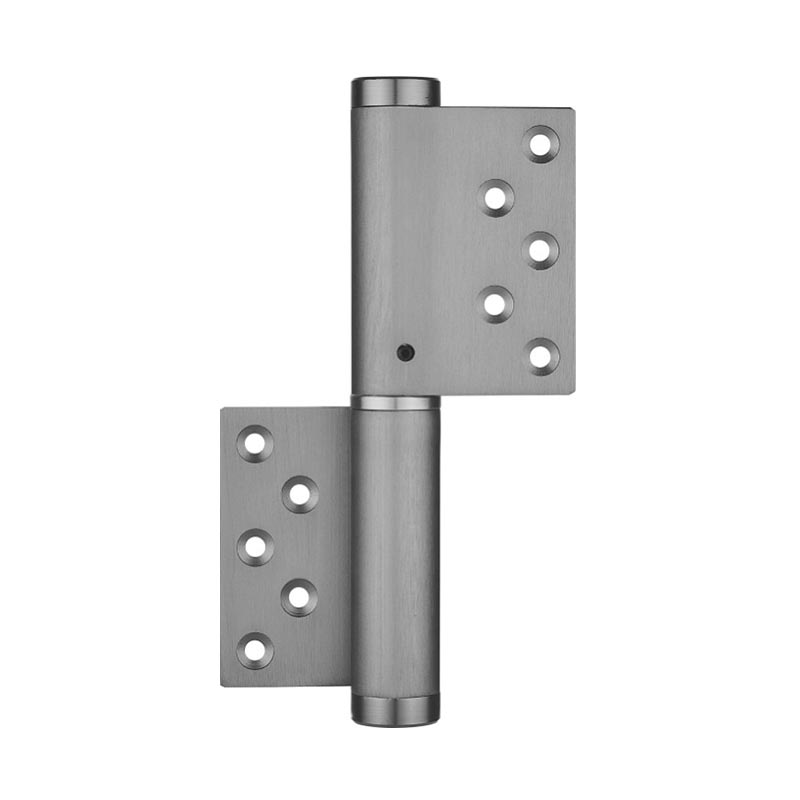
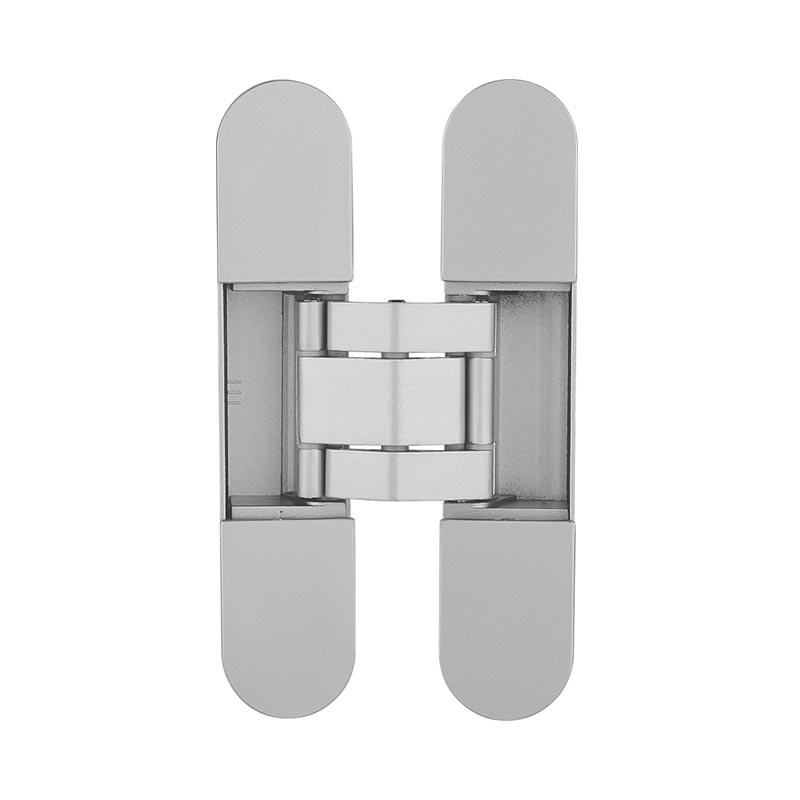
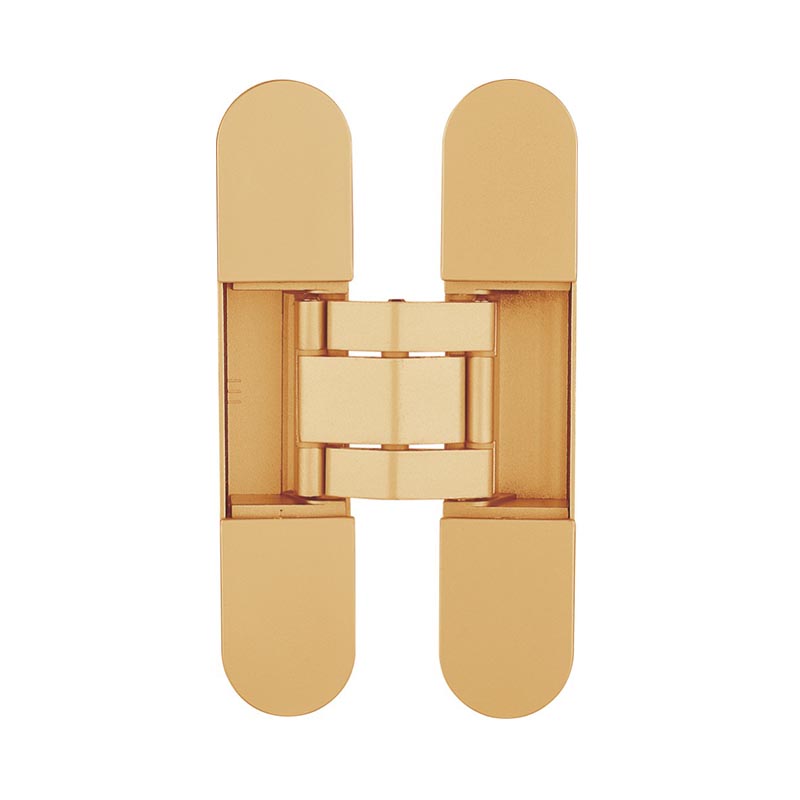
Concept of Three-Dimensional Adjustment
The adjustment system typically integrates several mechanical components that work together to provide controlled movement. Each direction of adjustment is independent, allowing users to fine-tune alignment step by step. Concealed 3D Adjustable Hinges use internal adjustment screws and sliding elements to achieve these movements while keeping the hinge hidden inside the door and frame.
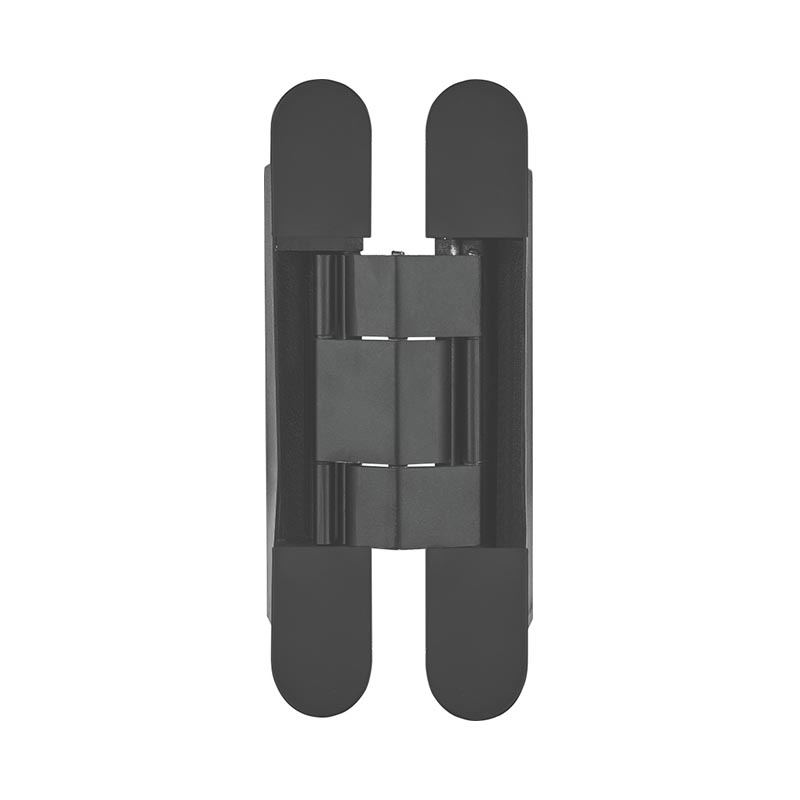
Vertical Adjustment Mechanism
- Vertical adjustment allows the door to move up or down in order to correct issues such as uneven gaps or door sagging. This adjustment is usually achieved through a threaded screw system connected to the hinge body. When the adjustment screw is rotated, it moves a support element that raises or lowers the door position.
- The threaded design allows precise control because small rotations of the screw produce small changes in height. This helps installers achieve accurate alignment without excessive trial and error. Vertical adjustment is particularly important for heavy doors that may settle slightly after installation.
- The mechanical structure must be strong enough to support the full weight of the door while maintaining adjustment accuracy. High-quality materials and precision machining help ensure long-term stability.
Horizontal Adjustment Mechanism
- Horizontal adjustment allows the door to move left or right within the frame. This movement is essential for achieving consistent gaps between the door and frame edges. Proper horizontal positioning improves both appearance and functionality.
- The mechanism usually consists of sliding plates or movable hinge sections controlled by adjustment screws. Turning the screws shifts the hinge body sideways in a controlled manner. Because the movement is gradual and precisely guided, installers can align the door edges accurately.
- Horizontal adjustment also helps prevent friction between the door and frame. Proper alignment reduces wear on both the hinge and the door surface, improving long-term performance.
Depth Adjustment Mechanism
- Depth adjustment controls the distance between the door and the frame. This adjustment ensures that the door sits flush with the surrounding surface when closed. Proper depth alignment is important for both aesthetics and sealing performance.
- Depth movement is typically achieved through an internal sliding structure that moves the hinge closer to or farther from the frame. Adjustment screws regulate this movement with precision. By adjusting depth, installers can ensure that the door closes evenly and maintains a uniform appearance.
- Depth adjustment also improves contact between locking mechanisms and strike plates. Proper positioning ensures the reliable operation of door hardware.
Independent Adjustment Design
- One of the key principles behind three-dimensional adjustment is independence between the different directions. Each adjustment axis operates separately, so that changing one setting does not significantly affect the others. This independence simplifies the installation process and allows precise corrections.
- The mechanical design usually separates adjustment functions into different screw systems. Each screw controls one direction of movement, allowing installers to make targeted changes. This modular approach improves usability and reduces adjustment time.
- Independent adjustment also makes maintenance easier. If alignment changes over time, the hinge can be readjusted without affecting previously optimized settings.
Internal Concealed Structure
- The concealed design is an important part of the adjustment principle. All moving parts are integrated inside the hinge body, making the mechanism invisible when the door is closed. This design improves the visual appearance of the door while protecting the adjustment components.
- Internal structures often include sliding blocks, threaded rods, and support plates that work together to provide controlled movement. The concealed configuration protects these parts from dust and accidental damage.
- Because the adjustment components are enclosed, they are less likely to experience external wear. This helps maintain smooth operation and long-term reliability.






 English
 Español
 русский