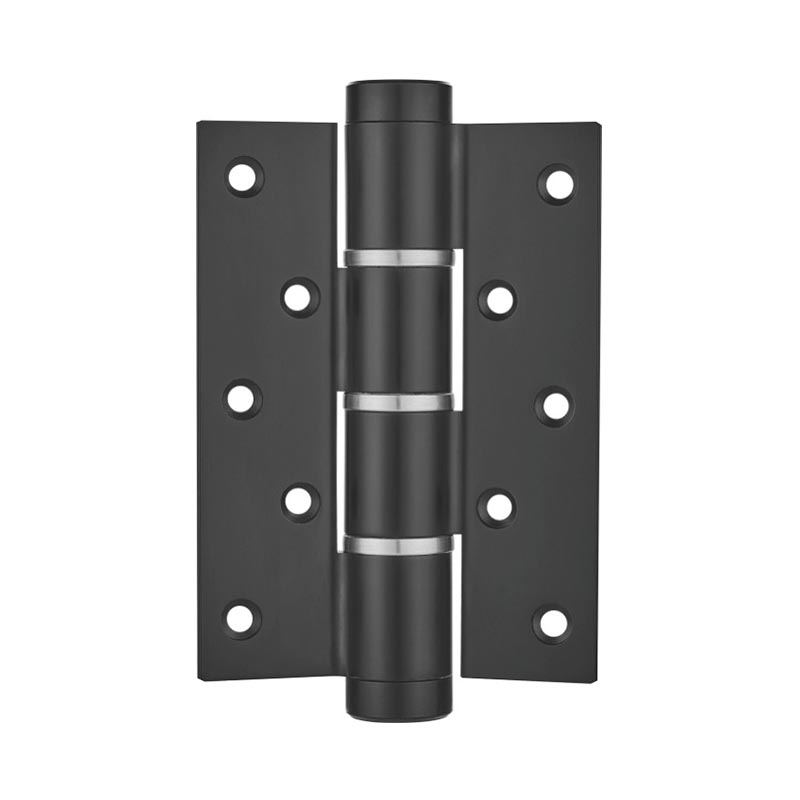
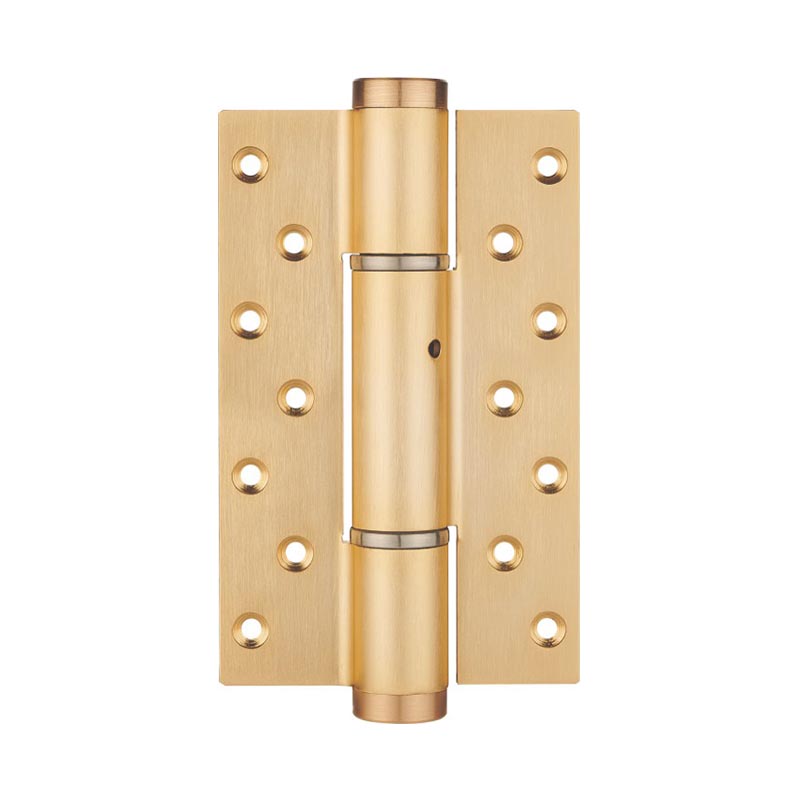
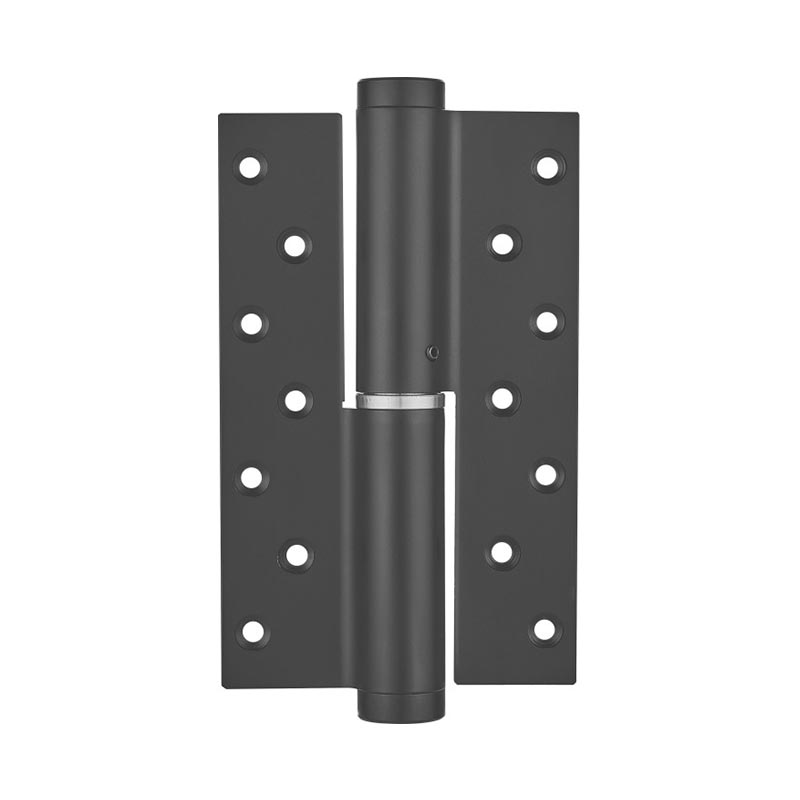
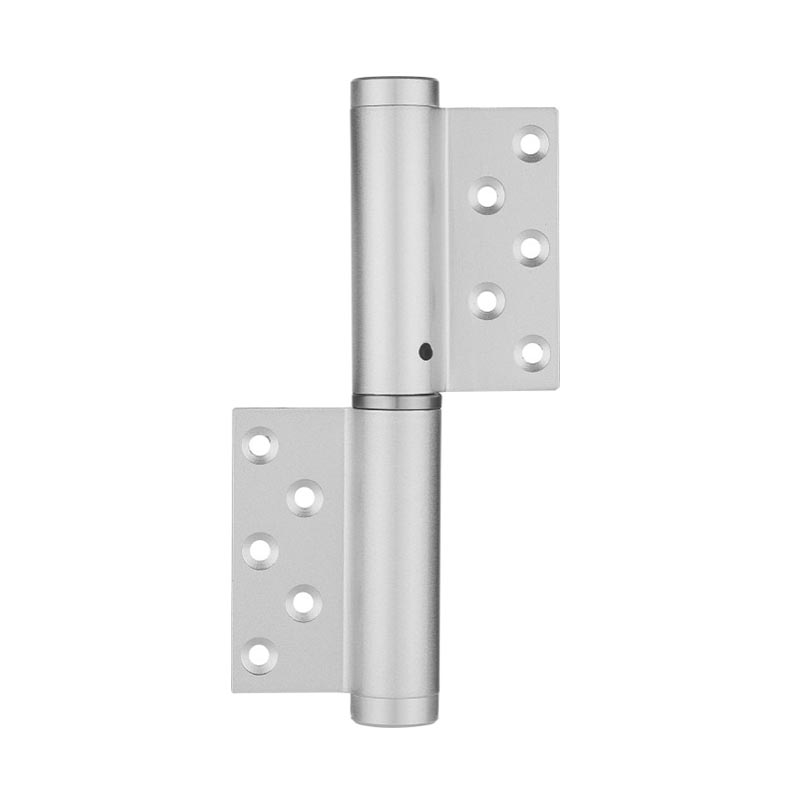
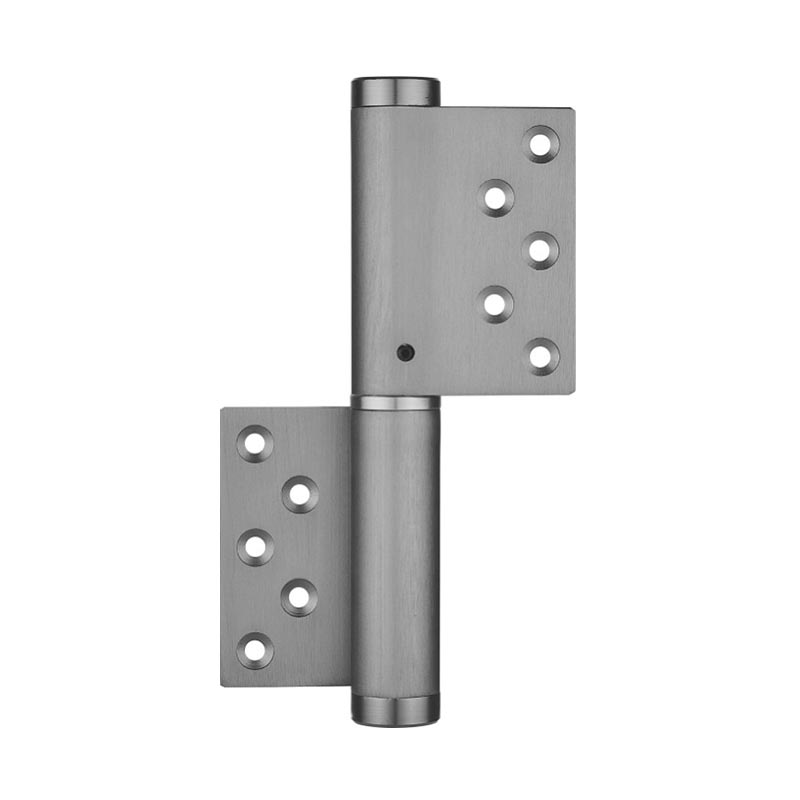
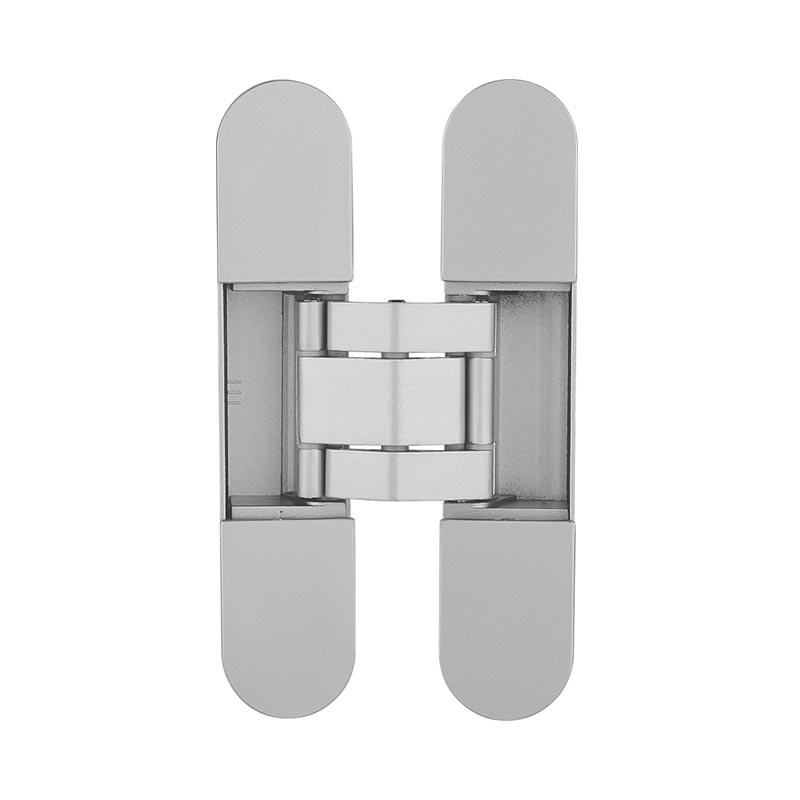
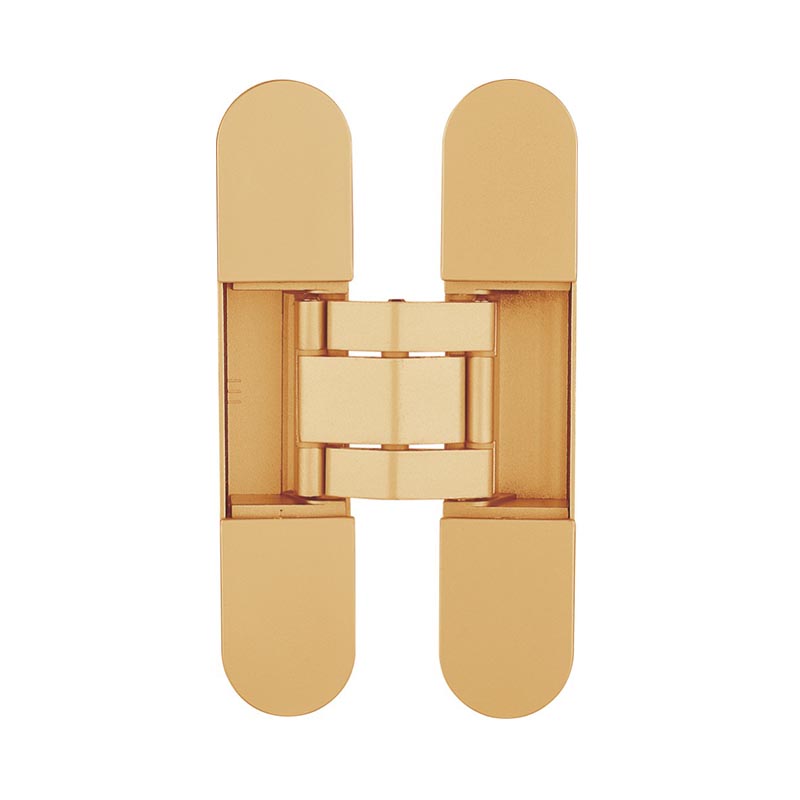
When using Concealed 3D Adjustable Hinges in high-quality cabinet doors, interior entry doors, or architectural panels, the ability to tune the buffering strength is essential for achieving smooth, controlled, and quiet closing performance. These hinges integrate compact hydraulic or pneumatic damping units inside a concealed housing, allowing the door to close without slamming, even when operated with force. Because the damping mechanism is built inside the hinge body rather than attached externally, designers and installers require precise methods to fine-tune the buffer strength to match door weight, material, and intended opening frequency. Adjustments must balance resistance and fluid movement within the mechanism to create the ideal deceleration curve. Understanding these tuning strategies ensures the hinge operates at good performance and maintains long-term reliability.
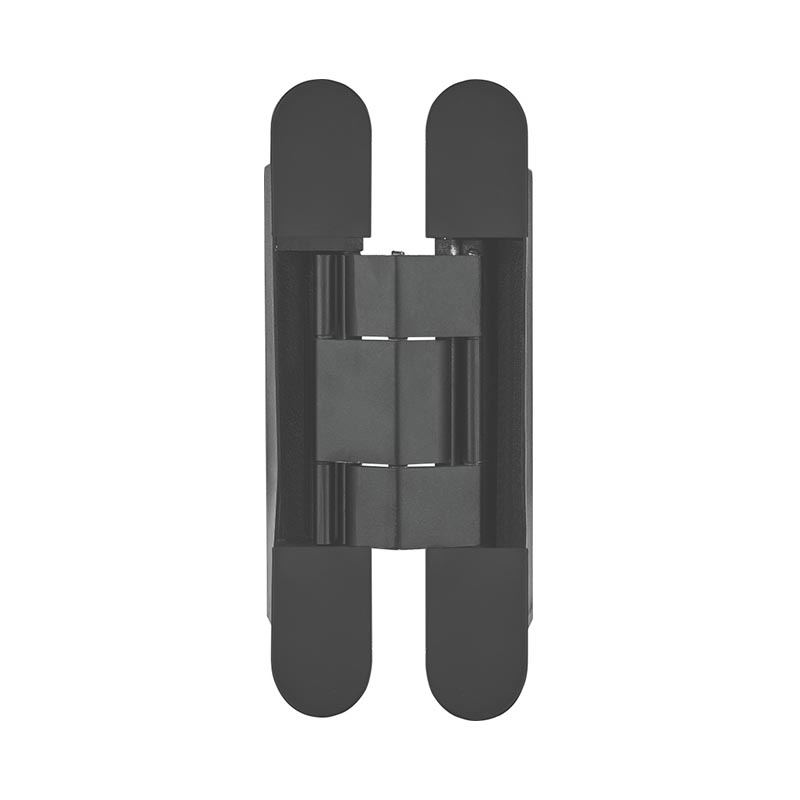
The common method of tuning buffering strength involves the use of integrated adjustment screws located on the hinge body. These screws typically control a valve or channel that regulates how hydraulic oil or internal air flows during the closing phase. By tightening the screw, resistance increases, resulting in slower and more forceful damping. Loosening the screw allows the fluid to move more freely, accelerating the closing motion. The installer can perform this adjustment with a simple screwdriver, making it highly accessible during both initial installation and later maintenance. Because these valves directly influence internal pressure and flow rate, the adjustment has a significant and immediate effect on how the door decelerates during the final few degrees of motion.
Another effective way to influence the overall buffering behavior is through precise 3D alignment adjustments. These hinges allow changes in vertical, horizontal, and depth positioning, each of which can indirectly alter how the damping unit engages during closing. For instance, shifting the door slightly inward or outward may change the amount of friction and the angle at which the damper begins to activate. If the door is misaligned, the damper may engage too early or too late, reducing its effectiveness. Therefore, correcting the alignment can optimize the interaction between the door’s weight distribution and the damping cylinder. This form of adjustment is subtle but essential, especially for heavy doors or doors installed in high-precision architectural environments.
Some concealed hinge systems offer interchangeable damping cartridges that provide varying damping intensities. These cartridges differ in spring strength, oil viscosity, or internal valve design, allowing installers to choose a suitable configuration for lightweight cabinet doors, medium-weight interior doors, or heavy architectural panels. Replacing the cartridge enables a broader adjustment range than valve tuning alone, allowing operators to match the hinge damping characteristics to unique design conditions. This approach is particularly useful for custom installations where doors may exceed standard weight ranges or where users desire extremely soft and silent closing effects. Interchangeable cartridges also allow long-term maintenance by replacing worn-out damping units without replacing the entire hinge.
Lubrication quality within the hinge mechanism also influences damping response. In some hinge designs, the damping characteristics may drift over time due to lubricant degradation or evaporation. Applying manufacturer-approved lubrication can restore smooth fluid movement, ensuring consistent hydraulic reaction. Although this method does not directly tune damping strength, it stabilizes the system and prevents erratic motion such as sudden stops or uneven deceleration. Proper lubrication also prolongs hinge durability, making it an important step during routine maintenance cycles.

No.123, Kaixuan road, yunshan street, lanxi city, jinhua city, zhejiang province, china

+86-18066248602

+86-579-88864580

+86-579-88864581

Copyright © 2024 Lanxi Maya Hardware Co., Ltd. All Rights Reserved. Privacy Policy

Hydraulic Door Hinges Hardware Factory



 English
 Español
 русский