

 English
 Español
 русский
News
Home / News / Industry News / Door Hinge Finishes: Match the Surface Specification to the Installation
A finish that looks right on a sample board may behave differently once the hinge is installed. A dry interior doorway, an entrance exposed to damp air and a door cleaned frequently with chemicals present different conditions. Buyers comparing door hinge finishes need to connect appearance with the environment, the underlying material and the manufacturer's documented surface treatment.
The useful purchasing question is more specific than whether silver or black looks better. It is whether the proposed finish is suitable for the actual location, can be supplied consistently and can be maintained using the planned cleaning routine. A clear approval record gives distributors and door manufacturers a stronger basis for repeat orders.
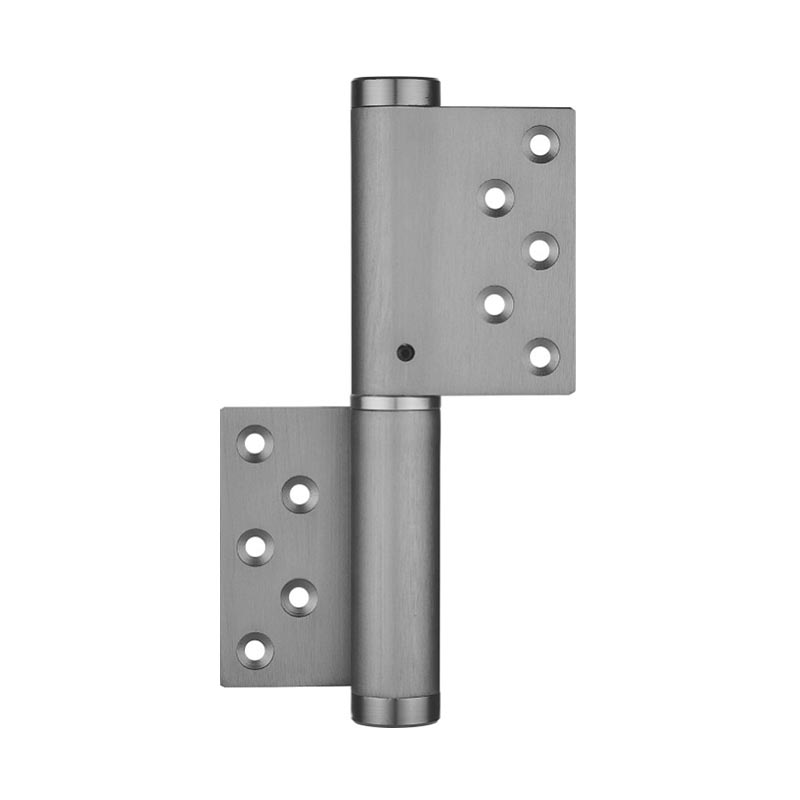
Identify the exact hinge model before comparing finishes. The visible cap, hinge body, pin and fixing screws may not all use the same material or treatment. Ask which parts are covered by the finish description and whether any concealed surfaces have a different specification. A polished appearance alone does not identify the base metal.
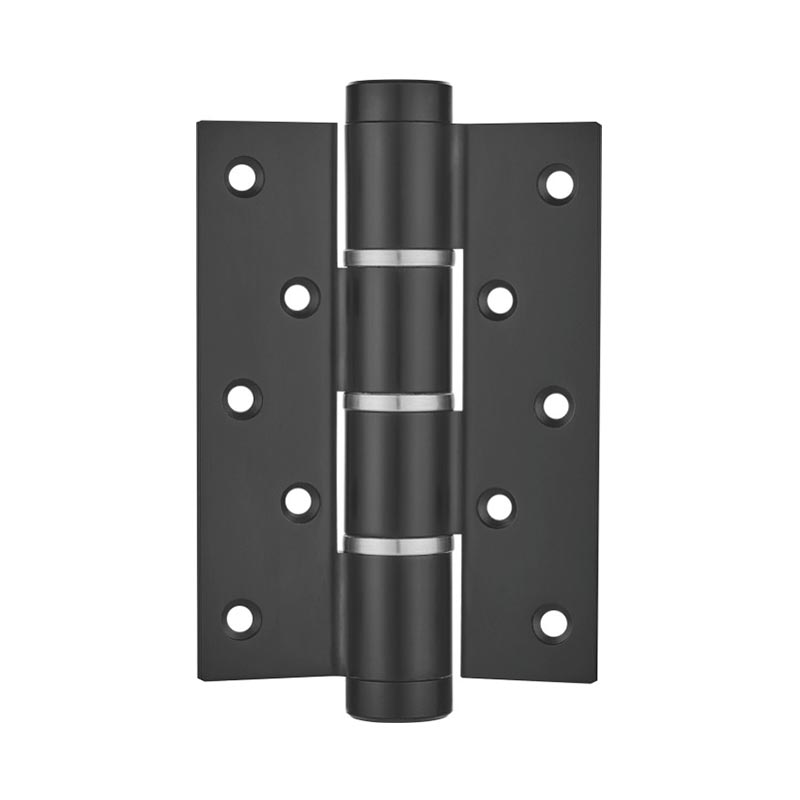
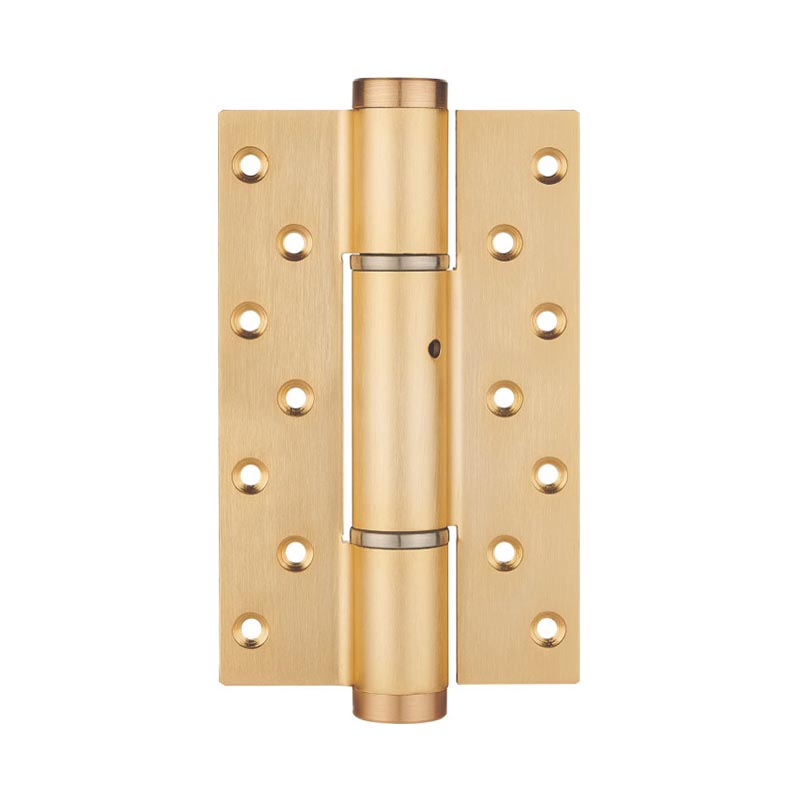
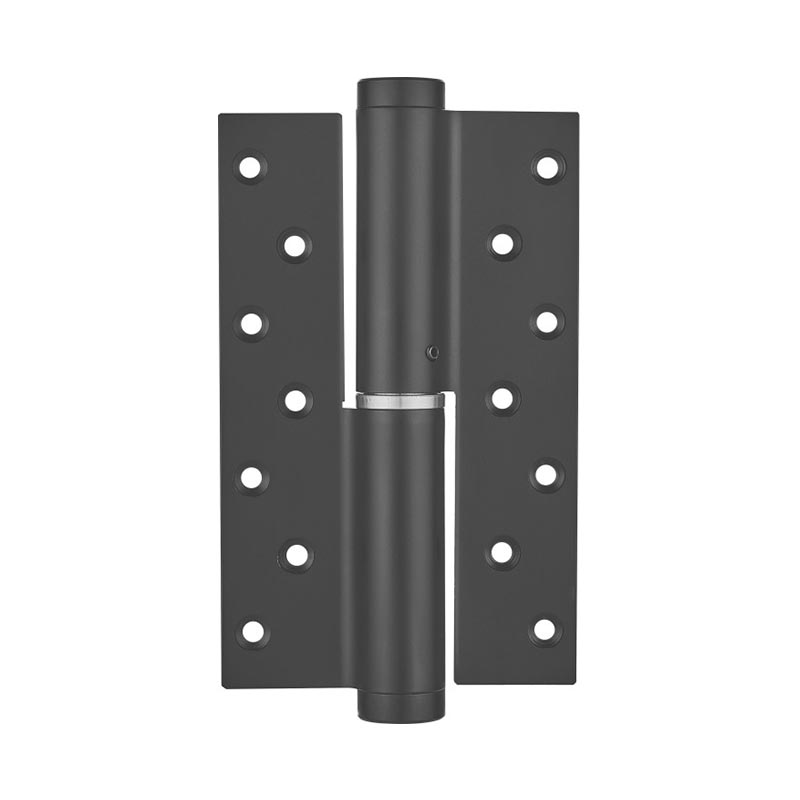
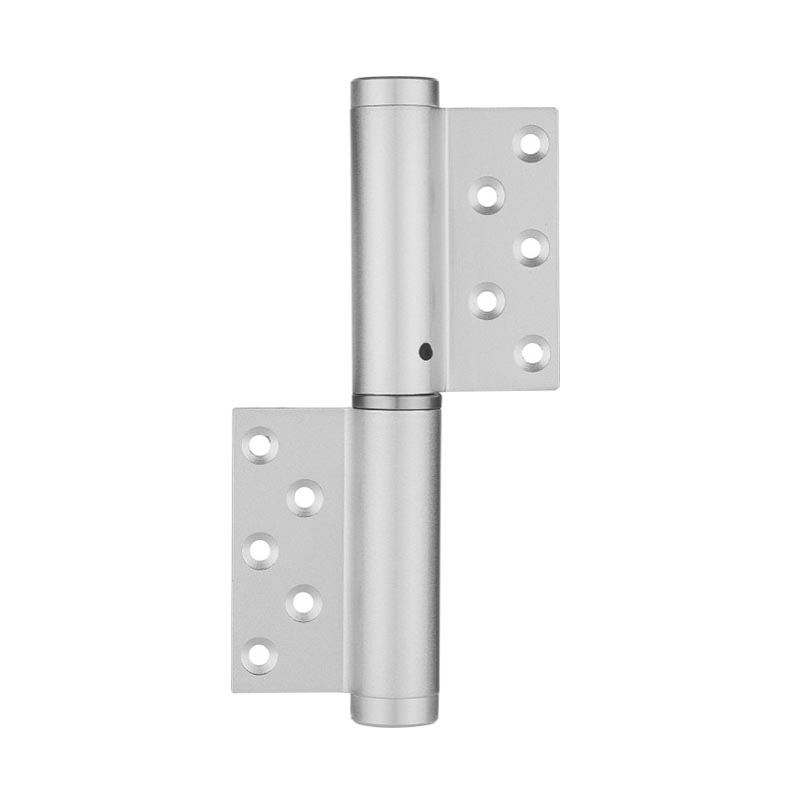
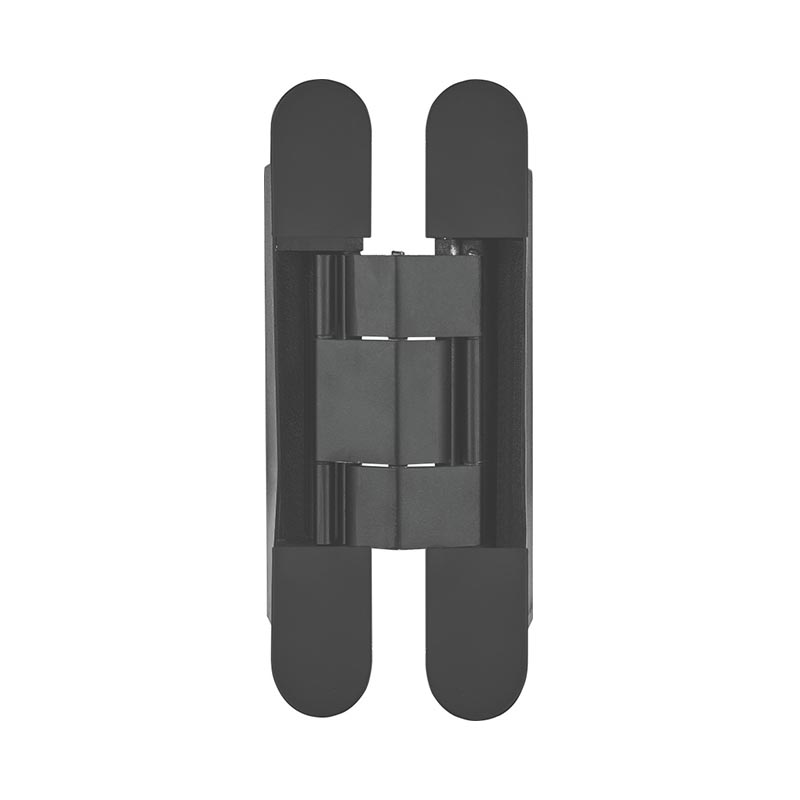
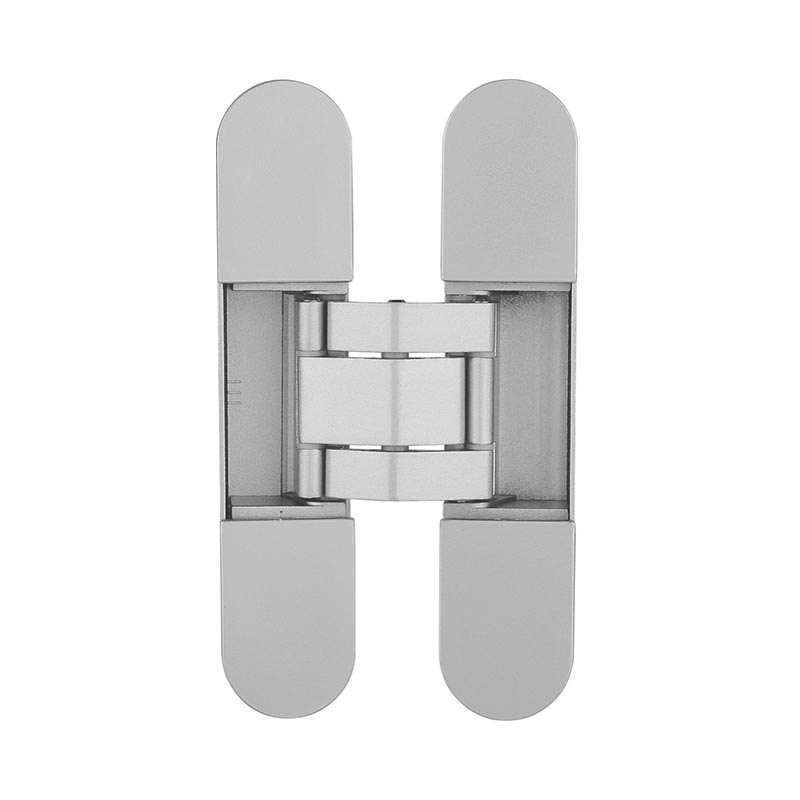
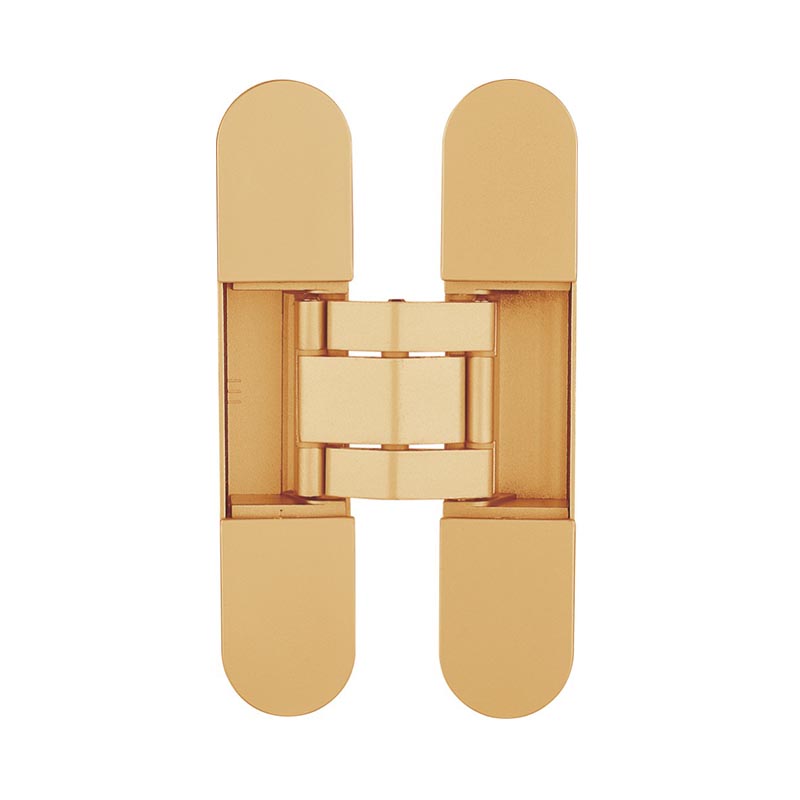
When reviewing the concealed hinge range, keep the product code alongside the finish reference. Similar-looking hardware can have different construction. Do not transfer a surface claim from one model to another because the catalogue photographs share a colour. The quotation should identify the offered combination rather than leave the workshop to infer it from an image.
Check accessories as part of that combination. Screws and cover caps that differ visibly from the hinge can become a project concern even when the main body matches the approved sample. Confirm which accessories are supplied and how their appearance is judged.
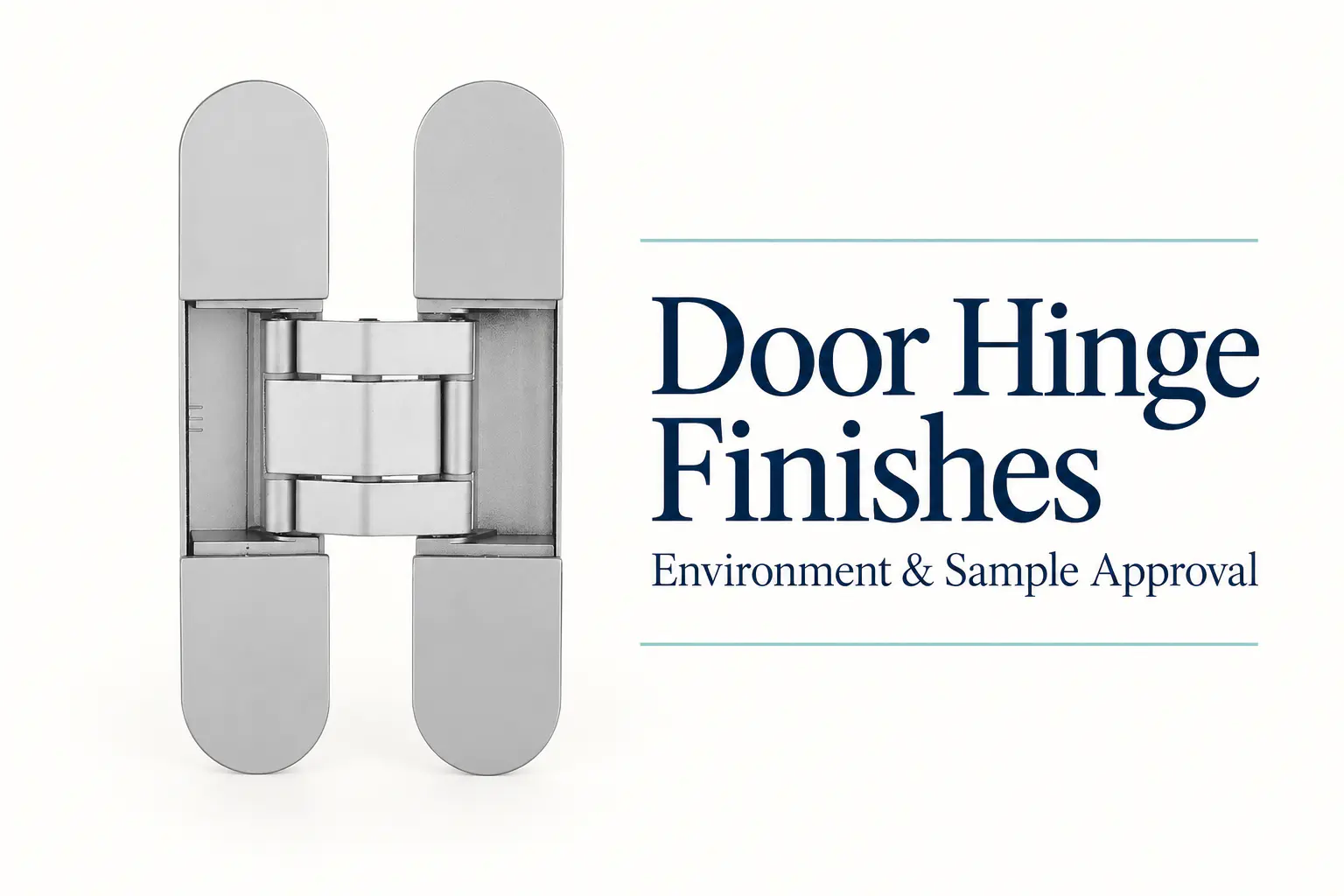
Tell the supplier where the door will be installed. Indoor use is not a complete description: humidity, nearby water, airborne contaminants and the cleaning process can change the exposure. Include whether the hinge receives direct weather, is sheltered or sits inside a conditioned building.
If a project has a specified corrosion test, provide its method, duration and acceptance criteria for review. Ask whether the evidence applies to the offered model and surface treatment. A test result under defined conditions should not be converted into an unsupported number of service years at every location.
For a doorway with unusually demanding exposure, ask the project team to evaluate the complete hardware specification. Changing the colour alone does not necessarily change the underlying material or protection system. Resolve that distinction before requesting production quantities.
Hinge finish sample approval works best when the sample is treated as a controlled reference. Record its model, finish description, date and approval status. Evaluate it under the same lighting and against the same adjacent door hardware that will be used for the project.
Gloss, texture and colour can all affect the impression of a metal surface. A brushed part viewed along the brushing direction may look different when rotated. Photographs are useful for communicating differences, but lighting, camera settings and screens can change the apparent shade. Keep a physical reference where the appearance is important.
Ask how the supplier handles acceptable variation between production lots. An approval based on one carefully lit photograph leaves little guidance for receiving inspection. A retained sample and an agreed evaluation method make later discussions more specific.
|
Review area |
Information to request |
What the answer establishes |
|---|---|---|
|
Base material |
Material for body, caps and fixings |
Which construction is being offered |
|
Surface treatment |
Treatment and finish reference for the actual model |
How the visible appearance is specified |
|
Exposure suitability |
Written application recommendation and limitations |
Whether the offered specification matches the location |
|
Test evidence |
Method, sample identity and reported outcome |
Performance within the stated test conditions |
|
Appearance consistency |
Approved sample and comparison procedure |
How repeat deliveries will be judged |
These checks answer different questions. A colour match is not a corrosion test, and a test report does not automatically settle the appearance of screws or caps. Keep the evidence with the relevant requirement so a receiving team can use it correctly.
Ask for care instructions before the product is approved. Establish which cleaning products and methods are permitted for the selected finish. An aggressive cleaner, abrasive tool or unsuitable treatment may affect a decorative surface even when the hardware is otherwise appropriate for the location.
Facilities teams may already use a standard cleaning routine across a building. Share that information with the supplier rather than assuming that every finish tolerates it. If a different method is necessary, confirm that the building operator can adopt it consistently.
Do not add oil, polish or a protective coating to the visible surface unless the manufacturer recommends it for that product. Surface care and mechanical lubrication are separate instructions. A generic maintenance habit can create an unnecessary variable in a finish review.
Door hardware finish consistency also depends on handling after manufacture. Discuss how parts are separated inside the package and whether exposed surfaces can rub against screws or other hinges during transport. Packaging that protects the finish should still allow the receiver to identify the model and finish without mixing components.
At installation, keep the specified tools and handling precautions with the hardware. Check whether any temporary protective film must be removed and when. Adhesives or coverings left in place beyond the recommended period may complicate cleaning, so obtain the supplier's actual instructions.
For phased projects, record the lot and retained sample associated with each delivery. If a later consignment looks different, compare it with the agreed reference before combining stock. That approach is more useful than relying on memory after components have been distributed across several sites.
A complete specification gives the supplier an application to review and gives the buyer an inspection basis. Send the proposed location, finish reference and adjacent hardware information with the enquiry. The goal is an appearance and maintenance decision that remains clear when the first sample becomes a repeat production order.

No.123, Kaixuan road, yunshan street, lanxi city, jinhua city, zhejiang province, china

+86-18066248602

+86-579-88864580

+86-579-88864581

Copyright © 2024 Lanxi Maya Hardware Co., Ltd. All Rights Reserved. Privacy Policy

Hydraulic Door Hinges Hardware Factory