A concealed door hinge can look like a straightforward hardware substitution until the first door reaches the machining bench. The faceplate fits the drawing, but the pocket is too shallow, the frame has insufficient material around the fixing points, or a decorative trim blocks the adjustment screw. Each problem starts with an interface that was missing from the purchase enquiry.
For door manufacturers and hardware distributors, concealed door hinges deserve a review of the door and frame together. That review should happen before a machining programme, installation kit or bulk order is approved. Matching a product photograph is only the beginning; the useful question is whether the complete assembly can be manufactured, fitted and serviced as intended.
Identify the door leaf material, thickness, construction and intended opening direction. A solid timber leaf, a hollow construction and a door with a narrow internal reinforcement area can present different fixing conditions even when their outside dimensions match. Tell the supplier where reinforcement is available, rather than assuming that the visible surface represents the full supporting structure.
Provide the proposed hinge positions and the door dimensions with the enquiry. Ask the manufacturer to confirm the proposed application against the selected model. A load figure should be interpreted with its stated installation conditions, including the hinge arrangement and supporting structure. It should not become a general promise for every door carrying the same nominal weight.
A practical procurement drawing can show the hinge pocket, the reinforcement area and the fixing method on one sheet. This helps the hardware supplier and the door workshop discuss the same assembly. If the door construction is still being developed, identify that uncertainty before requesting a final quotation.
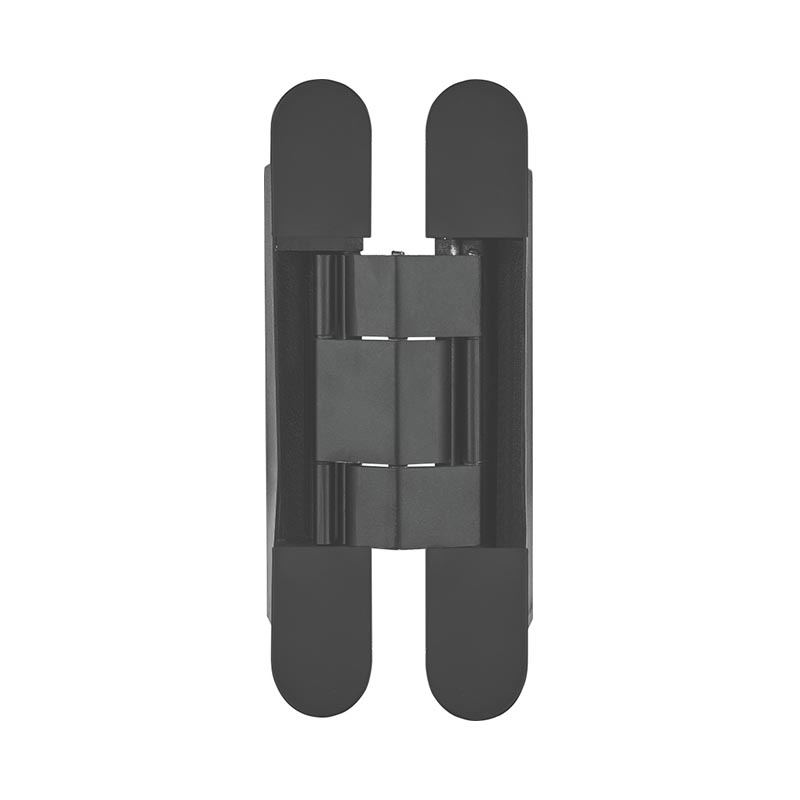
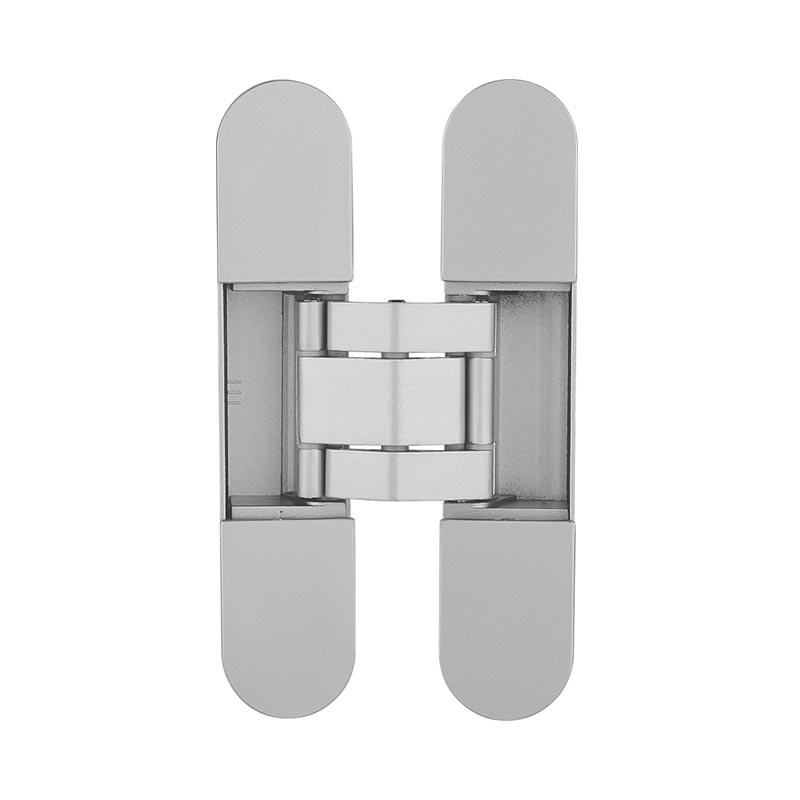
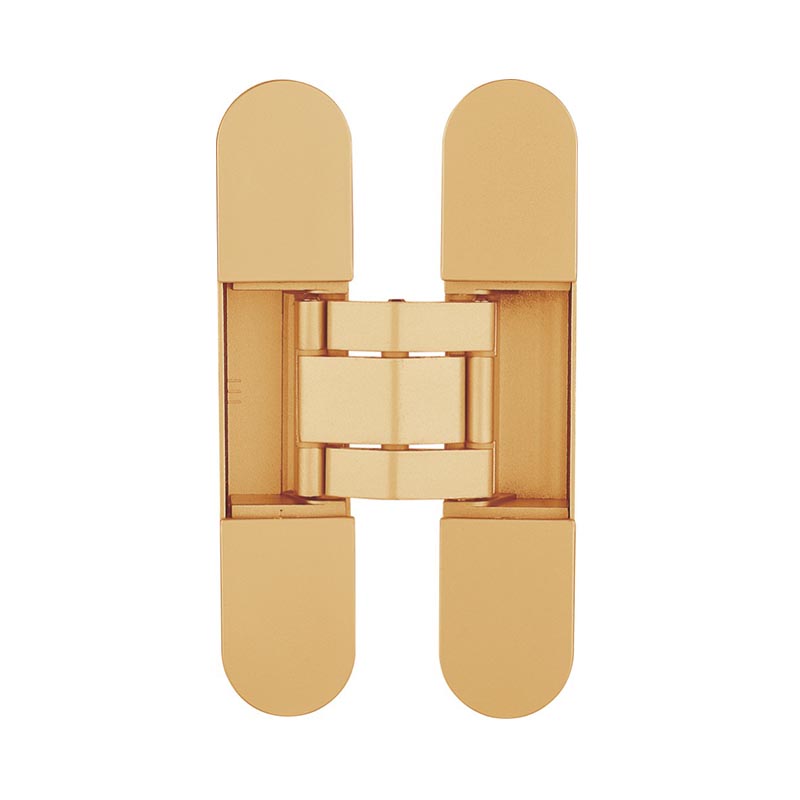
When reviewing 3D adjustable hinges, request the manufacturer's installation drawing for the actual product code. Compare the door side and frame side separately. The two pockets may have different geometry, and the shape shown in a catalogue image is not an adequate machining reference. Confirm the drawing revision with the sample supplied.
Concealed hinge routing depth needs particular attention because the finished surface hides much of the pocket. Check the remaining material behind it and the relationship between fixing holes and reinforcement. An apparently neat recess can still leave an unsuitable fixing arrangement. Any proposed change to the pocket should be reviewed with the hardware and door teams.
Keep the cutter or template reference with the approved drawing. Do not let a workshop copy dimensions from an old order simply because the replacement hinge has a similar faceplate. A small revision in the concealed body can matter more than a visible change in finish.
The installation review should include the frame rebate, seals, architrave and adjacent surfaces. Look at the door in its closed position and throughout its intended opening movement. The required opening angle comes from the project; the selected hinge and surrounding construction must be checked against that requirement.
Clearance is also relevant to the handle, latch and any other hardware. A door leaf that moves freely before seals are fitted may behave differently when the complete door set is assembled. Review the finished assembly instead of treating each item as an isolated purchase.
For a renovation order, measure the existing frame and photograph the hinge area with a clear scale reference. Existing pockets or damaged fixing points may restrict the options. A supplier cannot reliably assess those conditions from a front view of the closed door alone.
A 3D adjustable hinge installation should leave the adjustment points accessible in the installed condition. Ask for the correct tools, the adjustment sequence and the manufacturer's permitted adjustment range. Do not assume every screw is an adjustment screw or that tightening it will correct an alignment problem.
Decide who makes the final adjustment and when it takes place. A door aligned in the workshop may need review after the frame is installed. The handover record should distinguish initial assembly from site adjustment, particularly where separate contractors supply the door and fit the frame.
Decorative caps and trims should also be included in the sample review. Record how they are removed and refitted according to the instructions. Maintenance access is easier to protect before the design is released than after a finished project reveals that a screw cannot be reached.
A loose hinge sample can confirm finish and visible dimensions. It cannot establish how the selected hinge behaves in the buyer's actual door construction. Where the order depends on a new interface, assemble a representative door and frame using the proposed routing, reinforcement and fixing details.
Review the closed gaps, opening clearance, adjustment access and interaction with the latch and seals. Record the sample identifiers and the observations. This is an application review, not a substitute for a formal durability, safety or certification test. Any project requiring such evidence should specify it separately.
An illustrative purchasing scenario is a distributor adding a concealed hinge to an existing timber door range. The original routing template may have been designed for another hinge. The sensible first step is to compare the new drawing with that template and build one representative assembly, rather than release all doors for machining based on the outside hinge dimensions.
Once the assembly is accepted, a concealed hinge bulk order should identify the product code, finish, quantity per door, approved drawing and supplied accessories. Use the hinge catalogue as a starting reference, then attach the exact documents agreed for the order. Record whether screws, caps and adjustment tools are included.
Define how any revision will be communicated. A finish change, a replacement fixing or a different concealed body should be assessed for its effect on the approved assembly. The buyer's machining files and the supplier's product records need to remain aligned throughout repeat orders.
The strongest buying decision is one that can be repeated without relying on memory. Send the door construction, routing detail, opening requirement and sample findings together. That gives the supplier a specific application to review and gives the workshop a clear basis for producing the next batch.

No.123, Kaixuan road, yunshan street, lanxi city, jinhua city, zhejiang province, china

+86-18066248602

+86-579-88864580

+86-579-88864581

Copyright © 2024 Lanxi Maya Hardware Co., Ltd. All Rights Reserved. Privacy Policy

Hydraulic Door Hinges Hardware Factory



 English
 Español
 русский